
Ultimate Guide to Plastic Injection Molding Parts: Precision Manufacturing, Cost Savings & China Expertise (2026)
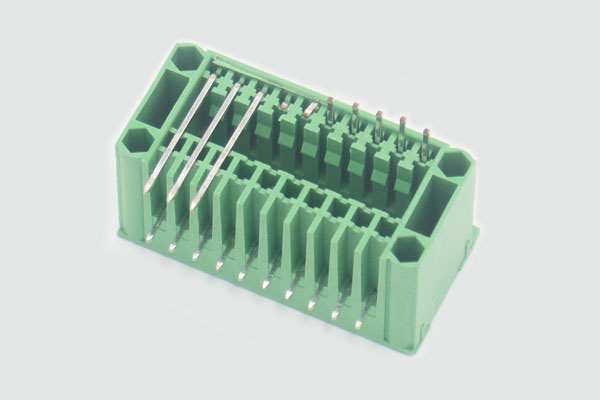
Plastic injection parts form the backbone of modern industrial manufacturing, enabling the mass production of complex components with exceptional precision and consistency. These parts, created through the injection molding process where molten plastic fills precision injection molds under high pressure, serve diverse industries from consumer goods to automotive assemblies. Companies worldwide rely on plastic injection molding parts for their durability, cost-efficiency, and design flexibility, making them essential for competitive product development.
How Plastic Injection Molding Parts Made: Process & Advantages
The plastic injection molding process transforms raw resin pellets into finished components through a sophisticated sequence of heating, injection, cooling, and ejection. Plastic pellets enter the hopper, melt in the barrel at 200-300°C, and get injected into injection molds at pressures up to 20,000 psi. Cooling channels solidify the part in 10-60 seconds, enabling production rates of thousands of pieces per hour. This efficiency surpasses alternative methods while maintaining tolerances as tight as ±0.001mm.
- Hopper feeds raw plastic pellets at controlled rates to prevent bridging.
- Reciprocating screw melts and mixes resin while building injection pressure.
- Heaters maintain barrel zones at precise temperatures (180-280°C).
- Nozzle seals against mold sprue bushing for leak-free injection.
- Clamping unit applies 100-1000 tons force to keep mold closed.
Plastic injection molding parts offer unmatched advantages for high-volume production. Unlike CNC machining, which removes material and creates substantial waste, injection molding builds parts additively from molten resin, achieving material utilization rates above 98%. Complex geometries including undercuts, threads, and thin walls (0.5mm minimum) become feasible without secondary operations. Surface finishes range from textured to mirror-polish directly from the mold, eliminating costly post-processing.
Key benefits of plastic injection parts include:
- Per-unit costs drop below $0.01 at volumes exceeding 100,000 pieces.
- Cycle times average 15-45 seconds for maximum throughput.
- Tooling amortizes over 1-5 million cycles for long-term savings.
- Multi-cavity molds (up to 128 cavities) multiply production capacity.
- Color and texture integrate during molding, avoiding painting.
Material selection determines plastic injection parts performance across applications. Commodity thermoplastics like polypropylene provide economical solutions for packaging, while engineering resins such as nylon and polycarbonate deliver enhanced mechanical properties. High-performance materials like PEEK withstand continuous temperatures to 260°C for aerospace components. Additives modify characteristics: glass fiber reinforcement boosts tensile strength 200%, flame retardants achieve UL94 V-0 ratings, and antimicrobials protect medical parts.
Essential materials for plastic injection molding parts feature:
- ABS: Impact-resistant for housings and consumer products.
- Polypropylene: Chemical-resistant, low-cost for containers.
- Polycarbonate: Transparent, high-impact for safety shields.
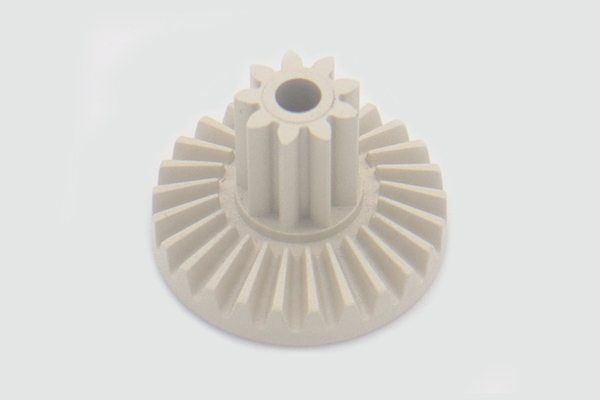
- Nylon 6/6: Wear-resistant for gears and fasteners.
- Acetal (POM): Low-friction for precision bearings.
Mold design expertise separates excellent plastic injection molding parts from mediocre ones. Precision mold making from P20 steel or other steel ensures 1-5 million cycle lifespans. Cooling channel layouts achieve uniform temperatures within ±2°C, reducing warpage by 40%. Gate locations at thickest sections prevent flow marks, while proper venting eliminates burn marks and short shots. Hot runner manifolds reduce material waste by 5-10% compared to cold runners.
Critical mold design parameters include:
- Draft angles: 1-2° minimum for easy ejection.
- Wall thickness: 1.5-3mm optimal for uniform cooling.
- Runner diameter: 2-4mm for balanced flow.
- Gate size: 0.5-1.5mm depending on part thickness.
- Vent depth: 0.01-0.03mm to release trapped gases.
Quality control throughout plastic injection parts production guarantees consistency. Statistical process control monitors critical dimensions to ±0.01mm using vision systems and CMMs. Resin lots undergo melt flow index testing (ASTM D1238) ensuring viscosity consistency. Every 100th part receives destructive testing for tensile strength (ASTM D638) and impact resistance (Izod). Final inspection verifies appearance, dimensions, and functionality before packaging.
Comprehensive quality measures encompass:
- First Article Inspection (FAI) establishes baseline dimensions.
- Capability studies achieve Cpk >1.67 for critical features.
- 100% automated inspection for safety-critical components.
- Material traceability from resin pellet to finished part.
- Final audit sampling per ANSI/ASQ Z1.4 standards.
Cost structures for plastic injection molding parts balance significant upfront tooling investment against dramatic per-unit savings. Steel production molds cost $15,000-$150,000 but amortize over millions of cycles. Material comprises 40-60% of total cost, optimized through precise dosing and up to 30% regrind usage. Labor costs drop to near-zero with robotic demolding and automated packaging. Production volumes above 50,000 pieces yield costs under $0.05 per part for simple geometries.
Cost breakdown reveals:
- Tooling: 60-80% upfront, <1% per million parts.
- Material: $1-3/kg, 20-50% total cost.
- Cycle time: 15-60 seconds determines hourly output.
- Automation: Reduces labor 70-90%.
- Packaging: 5-10% additional for bulk shipping.
Common defects in plastic injection parts trace to process parameter deviations. Short shots result from insufficient pressure or cold molds—increase injection speed 20-50% or raise barrel temperature 10°C. Sink marks indicate thick sections; redesign with ribs or foam cores. Weld lines weaken parts when flow fronts merge—relocate gates or increase temperature. Burn marks signal trapped gases; add venting slots 0.02mm deep.
Defect mitigation strategies include:
- Moldflow simulation predicts and prevents 90% of issues.
- Cavity pressure sensors provide real-time feedback.
- Hygroscopic resins dried 4 hours at 80°C.
- Process window established via Design of Experiments (DOE).
- Robotic inspection rejects 99.9% defective parts.
Sustainability transforms plastic injection molding parts manufacturing through material innovation and process efficiency. Bio-based resins like PLA reduce fossil fuel dependency by 60%, while recycled content reaches 50% without performance loss. All-electric machines consume 60% less energy than hydraulic presses. Closed-loop water systems recycle 95% cooling water, and lightweight parts cut transportation emissions 25%.
Green manufacturing practices deliver:
- Energy consumption: 0.3 kWh/kg for electric presses.
- Water usage: Reduced 80% via dry cooling.
- Scrap recycling: 98% material recovery rate.
- Carbon footprint: 40% lower with bio-resins.
- Mold lifespan: 5 million cycles minimize tooling waste.
Advanced technologies redefine plastic injection parts capabilities. Micro-injection molding produces parts under 0.1g with 0.005mm tolerances for hearing aid components. Gas-assist molding creates hollow thick sections, saving 30% material. Insert molding encapsulates metal inserts during injection, eliminating assembly steps. Multi-material molding combines rigid and flexible resins in single parts.
Cutting-edge capabilities feature:
- Industry 4.0 connectivity achieves 99.9% uptime.
- AI process optimization cuts cycle times 18%.
- 3D-printed cooling channels reduce cooling 45%.
- Hybrid metal-plastic molding for structural parts.
- Digital twins validate designs pre-tooling.
Case study:
Consumer electronics manufacturer developed USB charging holders via plastic injection molding parts. PTMS optimized gate locations and rib patterns, achieving 25% material reduction while maintaining 500-cycle durability. Production scaled from 10,000 prototype to 2 million annual volumes in 8 weeks. Defect rate dropped from 3.2% to 0.4%, saving $180,000 yearly.
Client testimonial from Global Packaging Corp: “PTMS plastic injection parts revolutionized our production. The PP spatulas with integrated hanging holes eliminated secondary punching, reducing assembly time 60%. Wall thickness optimization saved 22% material without compromising food-contact compliance. On-time delivery hit 99.7%, enabling just-in-time inventory and $420,000 annual savings.”
Comparison table demonstrates plastic injection parts superiority:
| Characteristic | Plastic Injection Parts | Sheet Metal Stamping | Die Casting |
| Minimum Wall Thickness | 0.5mm | 0.8mm | 1.0mm |
| Production Volume | 10K-10M+ | 50K-1M | 100K-5M |
| Cost per Part (100K) | $0.03-0.30 | $0.10-0.80 | $0.20-1.00 |
| Tolerance Capability | ±0.001mm | ±0.15mm | ±0.10mm |
| Surface Finish | Ra 0.8μm | Ra 1.6μm | Ra 3.2μm |
| Tooling Cost | $10K-100K | $20K-200K | $50K-500K |
Research from Georgia Tech’s George W. Woodruff School of Mechanical Engineering validates plastic injection molding parts efficiency. Their 2023 study found optimized cooling channels reduce cycle times 28%, achieving throughputs of 180 parts/hour versus 140 for conventional designs. The U.S. Department of Commerce Manufacturing Extension Partnership reports injection molding scrap rates averaging 1.2%, compared to 25% for machining.
National Institute of Standards and Technology (NIST) manufacturing data confirms CPK values exceeding 2.0 for mature processes, representing world-class capability. Plastics Engineering magazine documents servo-electric machines achieving 65% energy savings versus hydraulic systems, with cycle time consistency improving 22%.
Future developments promise further plastic injection parts innovation. Hybrid additive-subtractive processes enable complex internal geometries impossible with traditional molding. Smart molds with embedded sensors provide real-time cavity pressure data, preventing 95% of defects. Recyclable engineering resins match virgin material performance while meeting circular economy mandates.
Choosing plastic injection molding parts manufacturers requires evaluating technical capabilities matching specific requirements. Verify mold design expertise through flow simulation case studies showing balanced fills. Assess cleanroom certifications (ISO 7/8) for medical applications and IATF 16949 for automotive. Review production scalability from rapid prototypes to million-piece runs.
Selection criteria prioritize:
- CAD/CAM proficiency with Moldflow, SolidWorks expertise.
- Vertical integration spanning prototyping to assembly.
- SPC systems maintaining Cpk >1.67 across all dimensions.
- Global logistics experience with DDP Incoterms.
- Financial stability supporting 5-year production contracts.
Rapid prototyping validates plastic injection parts designs before full production commitment. Steel prototype molds produce 1,000-5,000 pieces in 2-3 weeks at 25% production tooling cost. Bridge tooling transitions seamlessly to hardened steel production molds. Scientific molding establishes robust process windows spanning ±10% parameter variation.
Prototyping methodology includes:
- Rapid tooling validates form, fit, and function.
- Design of Experiments (DOE) maps process capability.
- Gage R&R confirms measurement system adequacy.
- Customer validation runs precede full-scale production.
- PPAP Level 3 documentation for automotive clients.
Production scaling demands rigorous process validation. Installation Qualification (IQ) verifies equipment specifications, Operational Qualification (OQ) maps parameter operating windows, Performance Qualification (PQ) confirms consistent output. Robotic automation achieves 500 parts/minute with 99.9% uptime. ERP integration provides lot traceability from resin receipt to customer delivery.
Production ramp-up phases feature:
- Mold qualification achieves 99% first-pass yield.
- Full automation scales to 1M+ pieces/month.
- Inline quality achieves Six Sigma capability.
- Supply chain integration ensures 98% on-time delivery.
- Continuous improvement targets 2% annual cost reduction.
Regulatory frameworks govern plastic injection molding parts for critical applications. FDA 21 CFR 820 mandates design controls and process validation for medical devices. Automotive PPAP requires full dimensional layouts, material certifications, and MSA studies. EU Medical Device Regulation 2017/745 demands risk management per ISO 14971. Environmental compliance includes REACH SVHC testing and RoHS material declarations.
Regulatory compliance requires:
- Design FMEA identifying potential failure modes.
- Process FMEA quantifying detection/prevention controls.
- Validation master plans spanning entire production chain.
- Annual supplier audits ensuring material consistency.
- Post-market surveillance tracking field performance.
Aftermarket services maximize plastic injection parts value over product lifecycles. Spare cavity sets maintain production capacity during mold maintenance. Reverse engineering replicates obsolete parts using 3D scanning and material analysis. Field failure analysis identifies root causes, informing design improvements. Material substitution programs reduce costs 15-25% through equivalent resin formulations.
Lifecycle management includes:
- Mold refurbishment extends life 50-100%.
- Material optimization maintains performance while cutting costs.
- Spare parts inventory prevents production interruptions.
- Engineering change implementation without downtime.
- End-of-life recycling recovers 95% material value.
Plastic injection molding parts manufacturing combines precision engineering, process control, and material science to deliver components powering global industries. Businesses achieve dramatic cost savings, accelerated time-to-market, and consistent quality through strategic partnerships with proven manufacturers. Superior plastic injection parts enable product differentiation while maintaining competitive pricing.
Choosing the right partner for plastic injection molding parts – PTMS
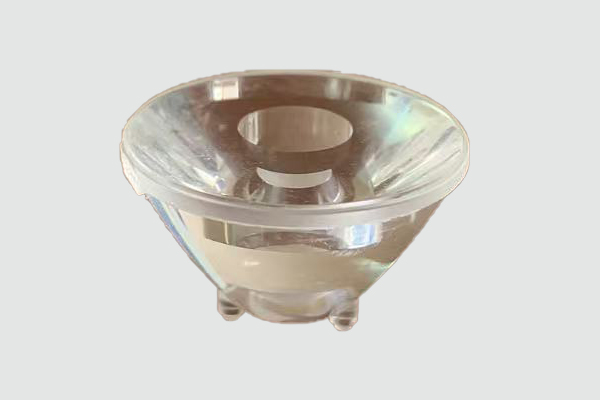
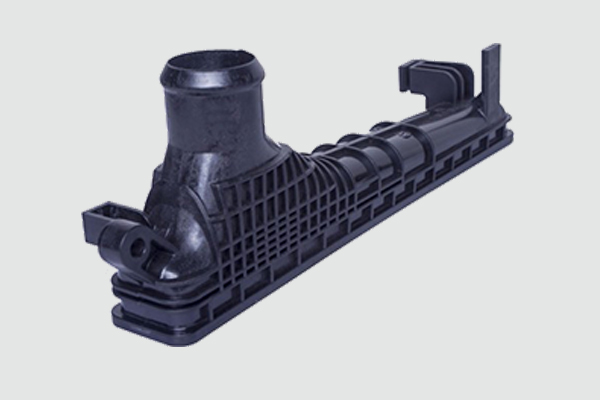
Choosing the right partner for plastic injection molding parts is critical to achieving manufacturing success. PTMS stands out as China’s leading provider of plastic injection parts, offering not only precision electronic connector, transparent lens, and auto exhaust pipe, but also a proven track record of delivering cost-effective, top-quality solutions across global industries.
– Unmatched Quality: Mold lifespans exceeding 1 million cycles, tolerances controlled to ±0.001mm, and compliance with ISO/IATF standards.
– Cost Efficiency: Automated multi-cavity production reduces per-unit costs by 20–30%, enabling competitive pricing at scale.
– Reliable Delivery: Annual capacity of 50+ million parts with on-time delivery rates above 99.7%, supported by global logistics expertise.
– Industry Expertise: Decades of experience serving medical, automotive, and consumer electronics sectors, consistently achieving customer satisfaction above 95%.
PTMS is more than a supplier—it is your trusted industrial manufacturing partner. For businesses seeking precision, reliability, and sustainable plastic injection molding parts solutions, PTMS is the partner of choice.
Authoritative Sources:
- Georgia Tech Mechanical Engineering Research – https://me.gatech.edu/research
- U.S. Department of Commerce MEP Program – https://www.nist.gov/mep
- NIST Manufacturing Extension Partnership – https://www.nist.gov/mep/publications
- Plastics Engineering Magazine – https://www.plasticsengineering.org/
- ASTM International Testing Standards – https://www.astm.org/standards