
Resources
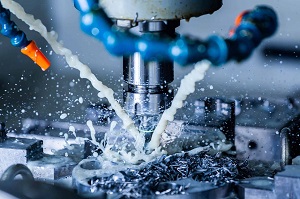
Introduction CNC machining is the first critical operation in injection mold manufacturing. Many engineers underestimate its importance, assuming that precision comes only from finishing operations. However, the quality of CNC machining directly affects subsequent semi-finishing, EDM, other mold components tooling, mold accuracy and the dimensional consistency of the final injection molding parts. PTMS uses the highest quality raw...
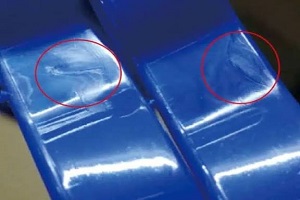
Gas bubbles can appear as round or oval defects in plastic injection molded parts, but they do not form for the same reason. Treating them as one problem can lead to ineffective troubleshooting. In plastic molded parts produced by injection molding, the first step is to determine whether the defect is a gas bubble. Once the defect type...
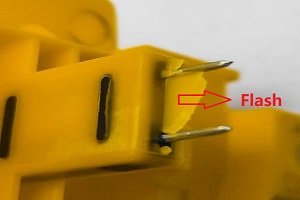
Flash is a thin, unwanted layer of plastic that escapes from the mold cavity and remains along the edge of a finished part. It may look minor at first, but excessive flash can affect cosmetic quality, create assembly interference, increase trimming work, and indicate that the mold or process is operating outside a stable condition. In plastic injection...
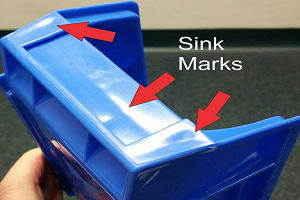
Sink marks are localized depressions on the surface of a plastic molded part. They commonly appear in thick-wall sections, behind ribs, at the base of bosses, or in areas where material accumulates. Although they are often treated as cosmetic defects, sink marks can also indicate that a local area has not received enough material during packing and cooling....
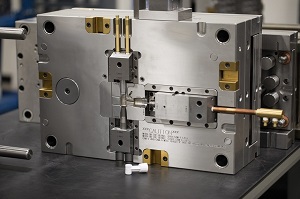
In injection mold design, the slider is one of the most common mechanisms for handling side holes, side recesses, undercuts, and complex lateral features. Its value lies not in whether the feature can be produced, but in whether it can achieve smooth demolding while maintaining mold strength, molding stability, and long-term maintainability. Most slider problems don’t come from...
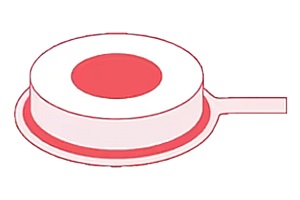
Beyond conventional gate types, there is a group of gate designs that are more purpose-built. These gates are not intended for general use. They are designed to solve specific molding challenges, such as uniform filling of large flat surfaces, balanced flow in annular parts, reduced shear in thin-wall products, or concealed gate marks on cosmetic surfaces. In actual...
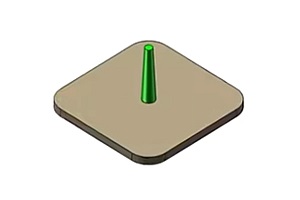
In injection mold, the gate is far more than a point where melt enters the cavity. It sets the terms for filling, packing, cosmetic quality, and demolding stability. Many defects that appear on the surface — sink marks, weld lines, short shots, flow marks — do not originate at the surface at all. Their root cause is usually...