Engineering Applications of Wire Cutting for Injection Mold Through-Holes
Wire cutting, also known as Wire Electrical Discharge Machining (Wire EDM), is the third major critical operation in plastic injection mold manufacturing. While CNC and sinker EDM handle cavities and cores, wire EDM specializes in precision through-holes that cannot be drilled or milled accurately.
When selecting an injection mold maker in China, engineers should confirm the supplier’s wire EDM capability, machine type, and inspection method. PTMS applies these controls as part of its mold manufacturing workflow in China, from steel preparation and CNC machining to subsequent precision operations. These machining operations are important in industrial manufacturing because mold dimensional stability directly affects part consistency, mold assembly, and production repeatability. More information about the company’s equipment and engineering capabilities is available on the China manufacturer page.
Wire EDM Machines: Slow Wire vs Fast Wire
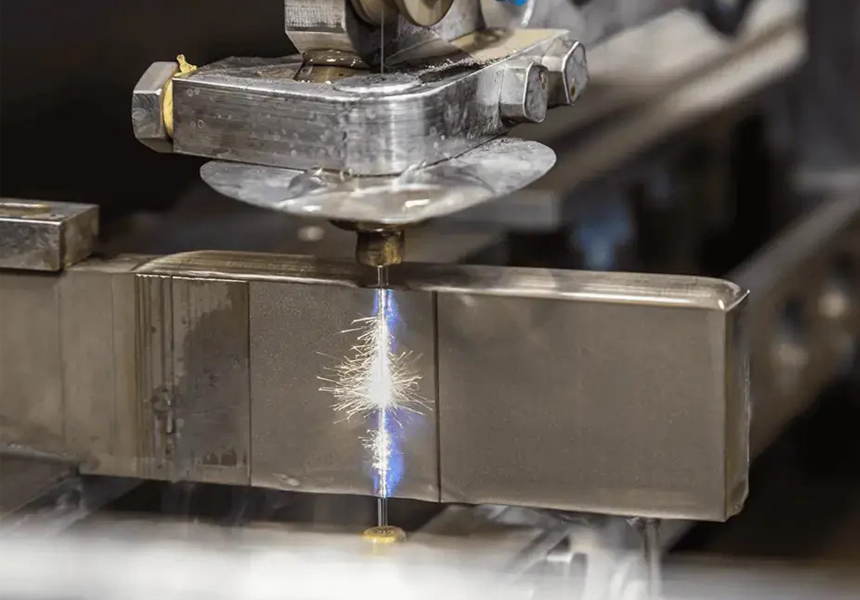
In this workflow, wire EDM machines are commonly discussed as slow wire and fast wire systems, which differ in wire delivery, machine configuration, processing speed, and achievable dimensional control.
Slow Wire Cutting (Precision Wire EDM)
Slow wire cutting machines use fresh wire that is not reused after passing through the cutting zone. Slow wire cutting machines generally require a substantially higher equipment investment because they are designed for tighter dimensional control and finer finishing operations.
Best for: Precision ejector pin holes with controlled diameter and position, lifter slots with tight tolerance, through-type insert openings with tight clearance.
Fast Wire Cutting (Conventional Wire EDM)
Fast wire cutting machines generally use a continuously moving and repeatedly circulated wire. Fast wire cutting machines generally require a lower initial investment and are commonly used for conventional wire-cutting work where the specified tolerance permits their use.
Best for: Non-critical through-holes, roughing operations, large molds where standard tolerance is acceptable.
Machining Strategy for Wire EDM
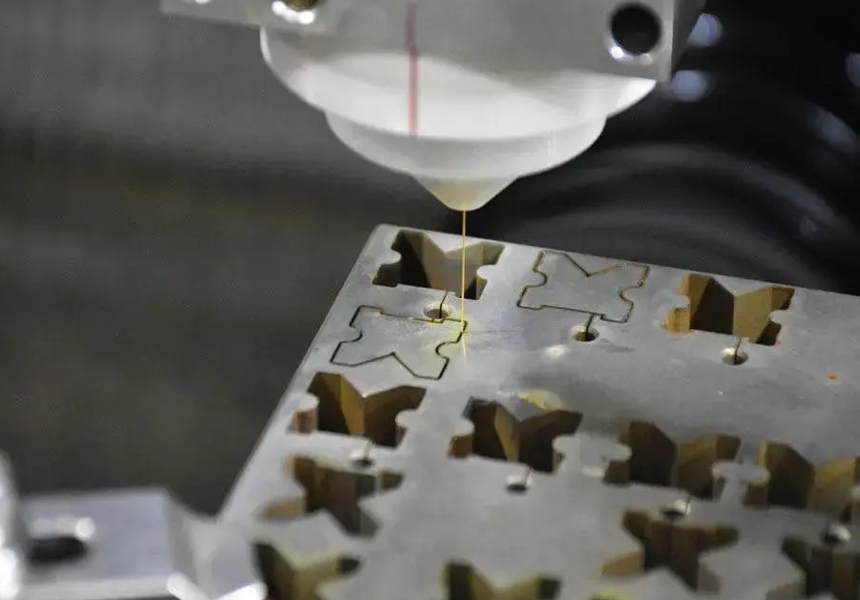
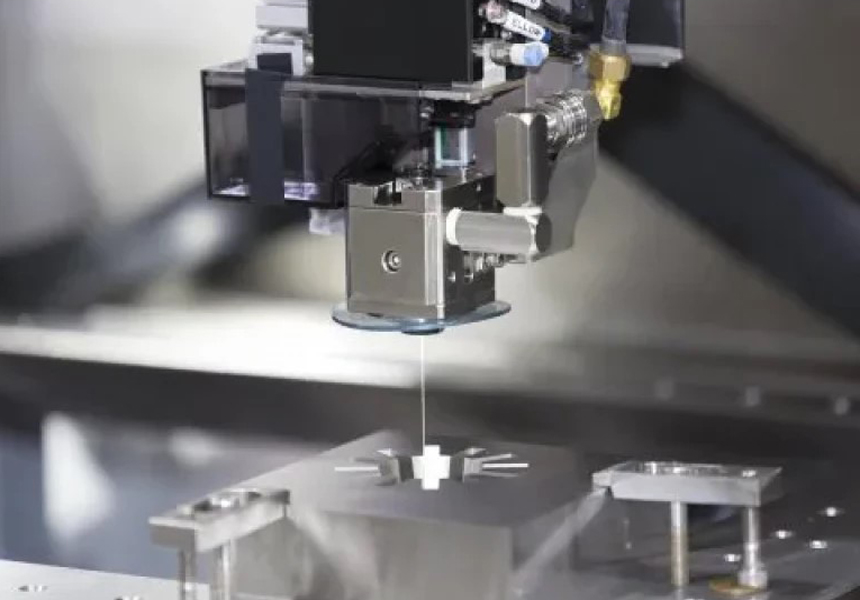
The basic principle of wire cutting is to use a continuously moving thin metal wire as an electrode. The wire electrode may be made of brass, molybdenum, copper, or another suitable conductive material, depending on the machine type, workpiece material, and required precision. This wire performs pulsed spark discharges on the workpiece, eroding the metal and forming the cut.
For selected high precision through-features, the common tolerance can be +/-0.01mm and even +/-0.001mm. The actual customized size should be confirmed according to the drawing, material, machine type, cutting strategy, and inspection requirements.
CNC establishes the basic cavity and core geometry, while EDM uses the finished copper electrode to refine the final cavity dimensions, corner transitions, and radii. Wire cutting then controls the profiles, locations, and fit of suitable through-features.
Engineering Judgment: Common Defects and Priority Checks in wire EDM
Dimensional Errors or Poor Surface Finish
The first suspect should be wiring tension and guide condition, rather than adjusting discharge parameters directly.
Wire tension and straightness should be checked first—loose or vibrating wire causes taper, oversized holes, and poor finish.
Guide and bearing condition should be prioritized before blaming machine accuracy—worn guides cause wire wander and dimensional drift.
Dielectric fluid conductivity should be verified if surface finish degrades—contaminated fluid causes arcing, pitting, and inconsistent cutting.
Work piece fixturing and grounding should be inspected if tolerance is not achieved—poor electrical contact causes unstable sparks and dimensional errors.
Taper on through-holes
It’s made by Wire deflection, guide misalignment, or unstable flushing, should Inspect wire path and flushing condition first
Wire breakage during cutting
It’s made by excessive cutting load, poor flushing, or unsuitable parameters, should Check flushing and wire path before changing cutting parameters.
If wire cutting provides limited improvement after these checks, then power supply stability, servo response, and thermal compensation should be evaluated.
Advantages of Wire EDM for Injection Mold Making
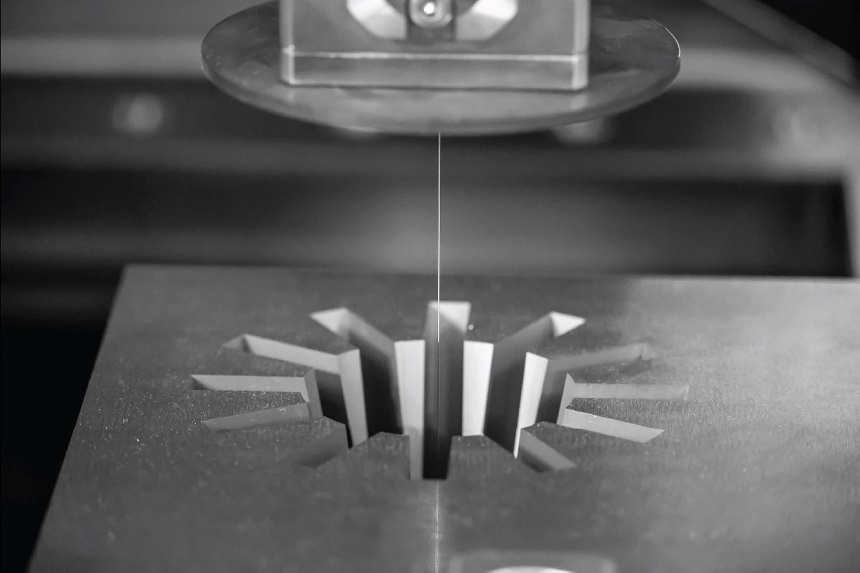
- Precision through-holes with controlled diameter and position
- Small internal corner radii can be produced, but the final radius is affected by wire diameter, spark gap, offset compensation, and cutting strategy
- Limited mechanical cutting force—reduces the risk of workpiece deflection and vibration associated with conventional milling
- Suitable for hardened conductive steel where conventional cutting may create excessive tool load or deflection
- Complex profiles—cuts non-circular shapes in a single setup
Application Conditions
Wire EDM is suitable for ejector pin holes, lifter slots, through-type insert openings with tight clearance, through-features in hardened steel, and non-circular profiles requiring precision tolerance.
For blind holes or cavities, sinker EDM is used instead of wire EDM. Companies comparing different injection mold maker in China options should verify whether the supplier has both slow wire and fast wire equipment, as this affects the range of tolerance and surface finish they can achieve for through-features.