
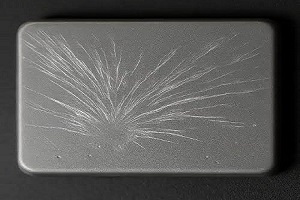
Silver Streaks in Injection Molding Mass Production: Cause Analysis and Solutions
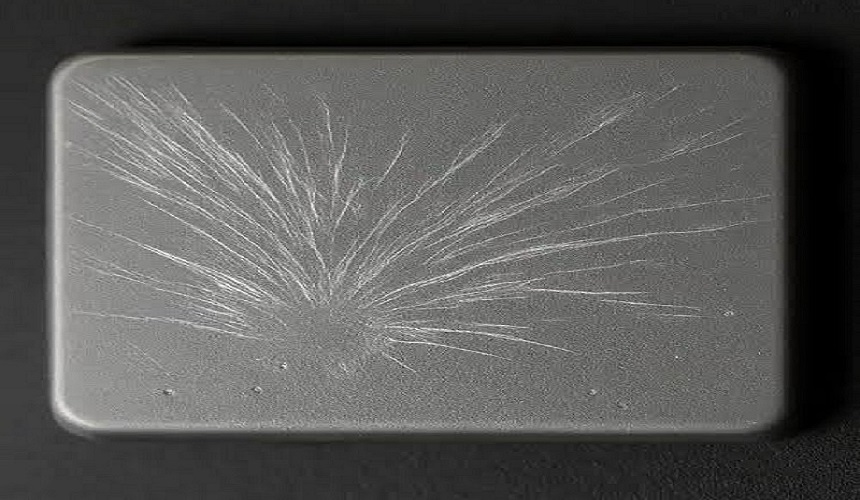
Silver streaks, also called splay, appear as silvery flow marks, gas-like trails, or localized shiny streaks on the surface of plastic injection molded parts. They are commonly associated with gas interference or an abnormal material condition. Although moisture is a common suspect, not every silver streak should be treated as a drying problem. Air entrainment, inadequate mold venting, localized overheating, material degradation, and contamination can produce conditions that require different corrective actions.
The first step is to determine whether the streaks repeatedly appear in the same location or fluctuate during injection molding mass production. For a fixed-location defect, local venting, gate and runner resistance, and injection mold conditions should be checked first, rather than changing drying or injection machine settings directly. If the streaks vary between cycles or appear after a material change, material condition, air entrainment, and barrel cleanliness should then be prioritized. This distinction helps a plastic injection molding company identify the likely source before selecting a corrective action.
Material Moisture or Insufficient Pre-drying
How It Contributes to Silver Streaks?
Material containing excessive moisture can introduce gas into the melt during injection molding processing. This gas may disturb the flow near the part surface and leave silvery trails or streaks.
Insufficient pre-drying is therefore an important possible cause, but the presence of silver streaks alone does not confirm a moisture problem. Similar surface marks can also result from entrained air, contamination, or degradation gases.
Cause Analysis and Corrective Solutions
When the defect fluctuates or appears after a change in plastic resin material condition, drying effectiveness should be checked before increasing melt temperature or changing injection speed.
The review should establish:
– Whether the material was dried according to its specified requirements.
– Whether drying was sufficient for the material being processed.
– Whether moisture was controlled before the material entered the barrel.
– Whether moisture or damp residue remained in the barrel after cleaning or a material change.
The corrective solution is to dry the material adequately and control its moisture condition. Barrel moisture should also be removed where it is identified.
Drying temperature, drying time, and acceptable moisture content should follow the requirements of the actual material grade. A single drying condition should not be applied to every resin.
If verified drying provides limited improvement, air entrainment, mold venting, degradation, and contamination should be investigated rather than continuing to increase drying intensity.
Entrained Air, Low Back Pressure, or Excessive Screw Speed
How It Contributes to Silver Streaks?
Air can become entrained in the melt during plasticizing. Low back pressure or excessive screw speed may contribute to this condition, allowing gas to remain in the material before injection.
The resulting streaks may resemble moisture-related marks. This makes it important to distinguish between water entering with the material and air introduced during melt preparation.
Cause Analysis and Corrective Solutions
Once material moisture has been checked, the plasticizing conditions should be reviewed before making unrelated changes to injection pressure.
The review should consider back pressure and screw speed together with melt temperature and residence time. Changing one setting in isolation may not resolve the gas source.
Corrective actions may include:
– Adjusting back pressure where insufficient melt consolidation is suspected.
– Reducing excessive screw speed where air entrainment is a concern.
– Reviewing melt temperature to avoid unsuitable thermal conditions.
– Controlling residence time to reduce unnecessary material exposure to heat.
The objective is stable melt preparation, not the highest possible back pressure or the lowest possible screw speed.
If these adjustments provide limited improvement, the investigation should return to the location of the streaks and whether local mold conditions or contamination are contributing.
Poor Mold Venting or Localized Overheating
How It Contributes to Silver Streaks?
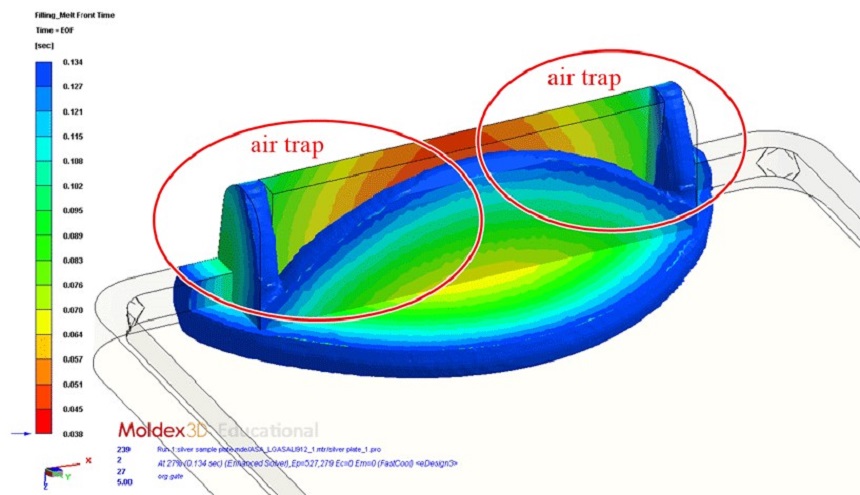
Inadequate venting can prevent gas from escaping effectively as the cavity fills. Localized overheating may also contribute to gas-related surface disturbance.
When streaks repeatedly occur near the same gate, flow transition, or cavity region, the location itself is an important clue. The issue may be associated with local flow resistance or venting rather than the overall moisture condition of the material.
Cause Analysis and Corrective Solutions
For a fixed-location defect, mold venting and the relevant gate and runner sections should be checked first, rather than adjusting back pressure or drying conditions directly.
The review should focus on:
– Whether existing vent paths are clear and effective.
– Whether venting serves the region where the streaks appear.
– Whether gate or runner resistance is contributing to unfavorable local conditions.
– Whether localized overheating is present.
Corrective solutions should improve effective venting and address the identified
restriction or thermal condition.
If cleaning existing vents provides limited improvement, their location relative to the affected filling region should be reviewed. Changes to gate or runner geometry should be based on the actual flow path, rather than made solely in response to the appearance of a surface streak.
Material Degradation, Contamination, or Incomplete Purging
How It Contributes to Silver Streaks?
Material exposed to unsuitable temperature or residence time may degrade and release gases. Contamination and incomplete purging can also leave unwanted material in the barrel, creating an unstable melt condition.
This cause deserves particular attention when streaks appear after a material change or persist despite adequate drying. Dry material does not rule out contamination or degradation elsewhere in the process.
Cause Analysis and Corrective Solutions
The material-change history and barrel condition should be checked before treating the defect as a moisture problem alone.
The review should establish:
– Whether the previous material was adequately removed.
– Whether barrel contamination remains.
– Whether the cleaning and purging procedure was completed effectively.
– Whether melt temperature and residence time are appropriate for the current material.
Corrective solutions should strengthen barrel cleaning, purging, and material-change management. Residual material and contamination should be removed, while temperature and residence time should be controlled to reduce degradation gases.
Increasing temperature should not be used as a general response to persistent streaks. If degradation is contributing, additional heat may work against the intended correction.
For plastic injection molded parts used in industrial manufacturing, the practical objective is to identify and control the gas source. Drying addresses material moisture, plasticizing adjustments address air entrainment, injection mold changes address local venting and flow conditions, and effective cleaning addresses contamination. These actions should follow the observed defect pattern rather than be applied as interchangeable solutions.