Plastic Injection Molding Defects & Solutions: Warpage
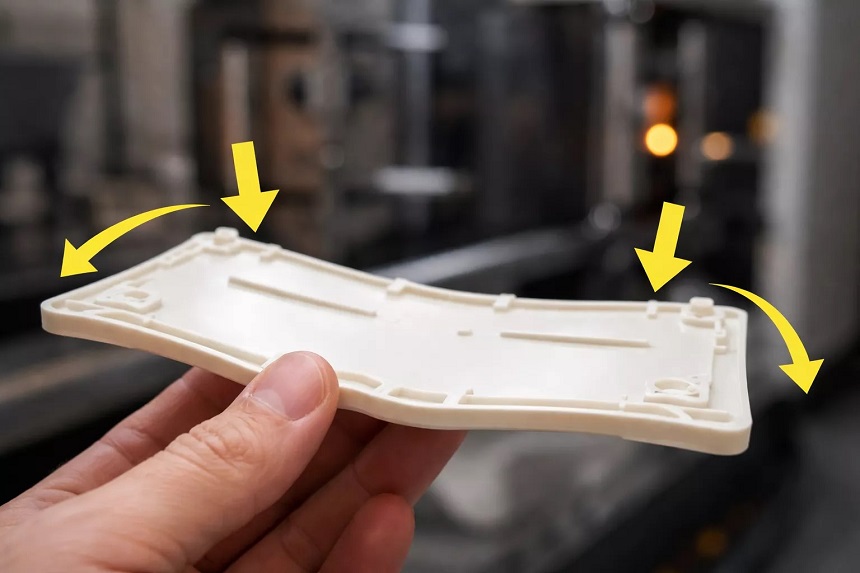
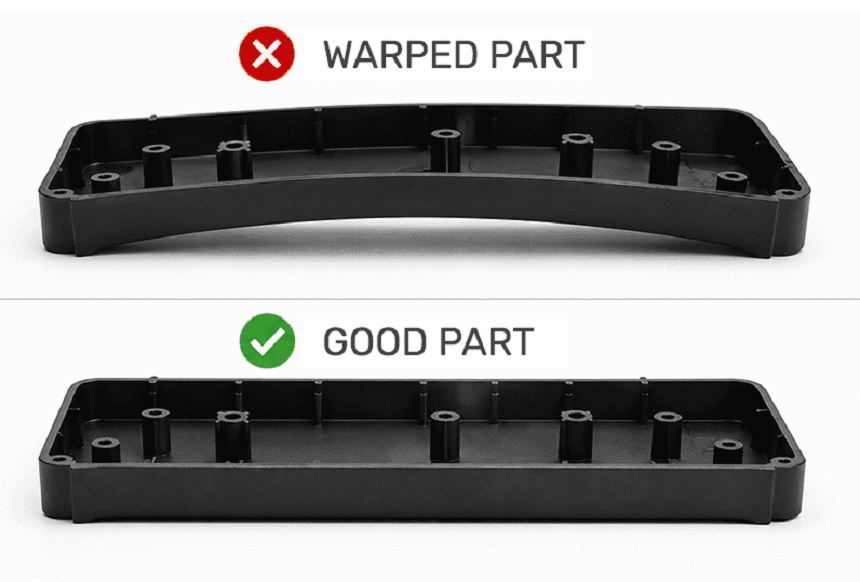
Warpage is a distortion in which a plastic injection molded part bends, twists, or moves away from its intended shape during cooling or after demolding. A flat surface may become bowed, an edge may lift, or opposing walls may no longer remain aligned. In industrial manufacturing, these changes can affect the relationship between mating surfaces and assembly features. Although warpage is often described as thermal deformation, it is not simply a sign that the part is too hot.
The first step is to determine whether the deformation follows a consistent location and direction or fluctuates during plastic injection molding mass production. For a repeatable pattern, cooling-system layout, gate and flow-path arrangement, and product structure should be checked first, rather than adjusting pressure or temperature directly. If the amount of deformation varies between cycles, process stability should then be prioritized. This approach helps a plastic injection molding company distinguish between injection mold or design conditions and processing conditions before selecting corrective actions.
Uneven Cooling
How It Contributes to Warpage?
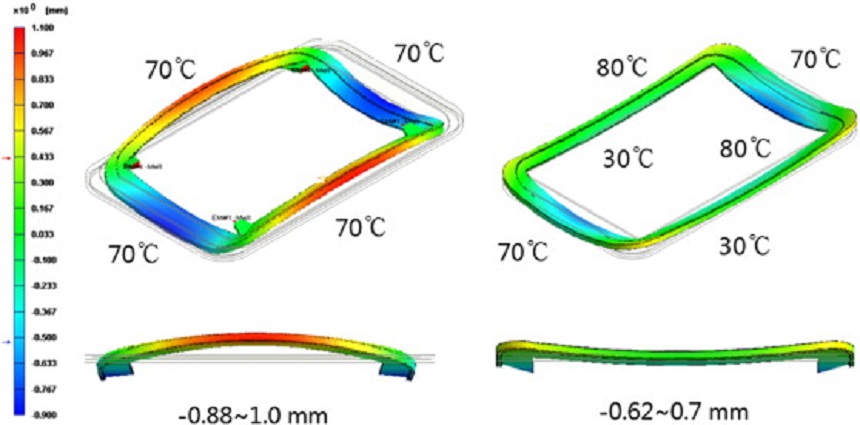
Different regions of a plastic molded part may cool and shrink at different rates. When contraction is not balanced across the part, the resulting movement can pull surfaces, edges, or walls away from their intended positions.
The geometry of the deformation can help identify the affected regions. A broad surface may bow, one edge may rise relative to the opposite edge, or adjoining walls may move out of alignment.
Differences in wall thickness can make cooling less uniform because thicker sections retain heat differently from neighboring thinner sections.
Corrective Actions
When deformation repeatedly occurs in the same area, the cooling-system layout and local wall geometry should be checked first. Changing the overall injection mold-temperature setting may provide limited improvement if the temperature distribution remains uneven.
The review should compare cooling conditions around the cavity and core, with particular attention to thick sections and transitions between neighboring features. The question is not only whether cooling is sufficient, but whether it is balanced.
Corrective actions should focus on:
- Optimizing the cooling system to improve temperature distribution.
- Checking that the relevant mold regions receive effective cooling.
- Balancing and controlling mold temperature.
- Evaluating cooling time together with local heat-removal conditions.
The objective is more uniform cooling, not simply the lowest possible mold temperature.
Uneven Molecular Orientation
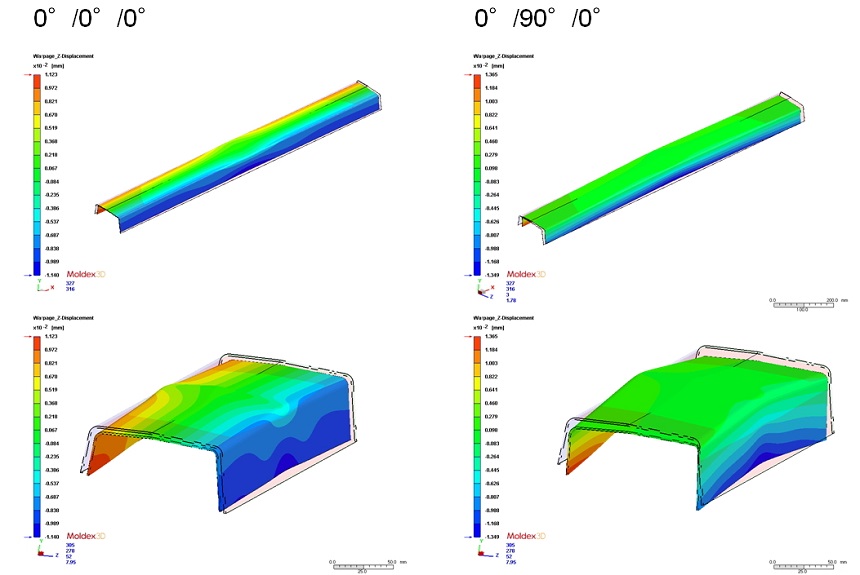
Material flow during plastic injection molding can create molecular orientation. When the orientation differs between regions, shrinkage may also differ with direction, contributing to bending or twisting.
The relationship between flow direction and part geometry is important. Adjacent regions may experience different flow conditions, particularly where the melt changes direction or passes through changes in section.
Warpage should therefore be evaluated as a directional change in shape, rather than only as an overall dimensional difference.
Corrective Actions
If the deformation consistently follows the same direction, the flow path and gate arrangement should be reviewed before making broad processing changes.
The review should consider:
– The main filling direction.
– Where the flow changes direction.
– How neighboring regions are filled.
– Whether the direction of deformation corresponds to the flow pattern.
Injection conditions can then be adjusted to reduce unfavorable orientation effects. Injection speed and temperature should be evaluated together, rather than assuming that increasing or decreasing one setting will always improve the result.
If processing adjustments provide limited improvement, the flow arrangement and product design should be reconsidered. The objective is to reduce orientation-related shrinkage imbalance, not to assume that molecular orientation can be completely eliminated.
Uneven Holding Pressure
How It Contributes to Warpage?
Holding pressure helps compensate for material contraction during cooling. If different regions receive unequal packing, they may shrink differently and pull the part away from its intended geometry.
A consistent holding-pressure setting on the machine does not, by itself, confirm that pressure is transmitted evenly throughout the cavity.
This is particularly important when a pressure adjustment changes the deformation without resolving it. The issue may involve uneven pressure distribution rather than an insufficient setting alone.
Corrective Actions
Pressure transfer should be checked before repeatedly increasing holding pressure.
The review should establish whether pressure reaches the regions showing deformation and whether the filling-to-holding transition and holding time support effective packing.
Holding pressure and holding time should then be optimized together. The objective is balanced shrinkage compensation, rather than the highest possible pressure.
If the same area continues to warp after these adjustments, gate arrangement, local wall thickness, and cooling conditions should be reviewed again. Further pressure changes should not replace investigation of a repeatable structural or cooling imbalance.
Unsuitable Product Structure
How It Contributes to Warpage?
Product structure affects material flow, cooling, and shrinkage. Uneven wall thickness, abrupt transitions, and concentrated material at feature intersections can create different conditions within the same part.
For example, a thick junction may cool differently from an adjoining thin wall. As the regions contract, the difference can contribute to bending or movement between neighboring surfaces.
The important issue is the relationship between features, not simply whether an individual wall is thick or thin.
Engineering Judgment and Corrective Actions
When deformation is repeatable and process adjustments provide limited improvement, product structure should be prioritized before further parameter changes.
The design review should focus on:
– Wall-thickness consistency across neighboring regions.
– Transitions between thick and thin sections.
– Material concentration at feature intersections.
– The relationship between geometry, flow direction, and cooling.
Possible corrections include reducing unnecessary material concentration and making thickness transitions more gradual where the functional design permits.
Design changes should be evaluated together with cooling and flow behavior. A local change that improves one region may alter how an adjacent region fills or cools, so it should not be assessed in isolation.
Warpage control requires a connected review of cooling balance, molecular orientation, holding conditions, and product structure. Balancing and controlling mold temperature is a central step, but a repeatable deformation pattern may also require changes to the flow arrangement or part geometry. The most useful correction is the one that addresses the identified imbalance, rather than temporarily changing the part’s shape through unrelated parameter adjustments.