
Injection Mold Maker Guide: How to Choose a Reliable Partner for Complex Plastic Parts
The injection mold maker plays one of the most critical roles in the entire plastic manufacturing ecosystem. Every plastic product—whether a medical device housing, an automotive connector, or a consumer electronics enclosure—begins with a precisely engineered mold. Choosing the right injection mold maker determines not only the quality of the final part but also the cost, lead time, and long-term stability of your production. A professional mold maker combines engineering knowledge, advanced machining capability, and strict quality control to transform a digital design into a physical mold capable of producing millions of consistent parts.
This article provides a complete, engineering-oriented guide to understanding what an injection mold maker does, how the mold-making process works, and how to evaluate a reliable partner for complex plastic components. It includes comparison tables, case studies, client testimonials, and authoritative references to help buyers make informed, confident decisions when selecting an injection tooling supplier.
What an Injection Mold Maker Actually Does?
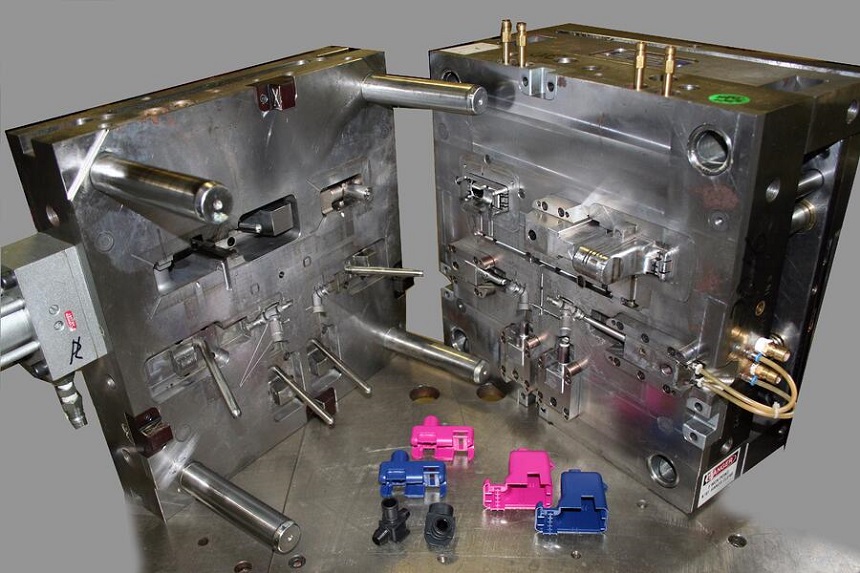
An injection mold maker is responsible for designing, machining, assembling, and validating the mold used in plastic injection molding. Their work requires precision engineering, material science knowledge, and hands-on craftsmanship.
Key responsibilities include:
– Analyzing 2D and 3D part data for manufacturability
– Designing the mold structure, gating, cooling, and ejection systems
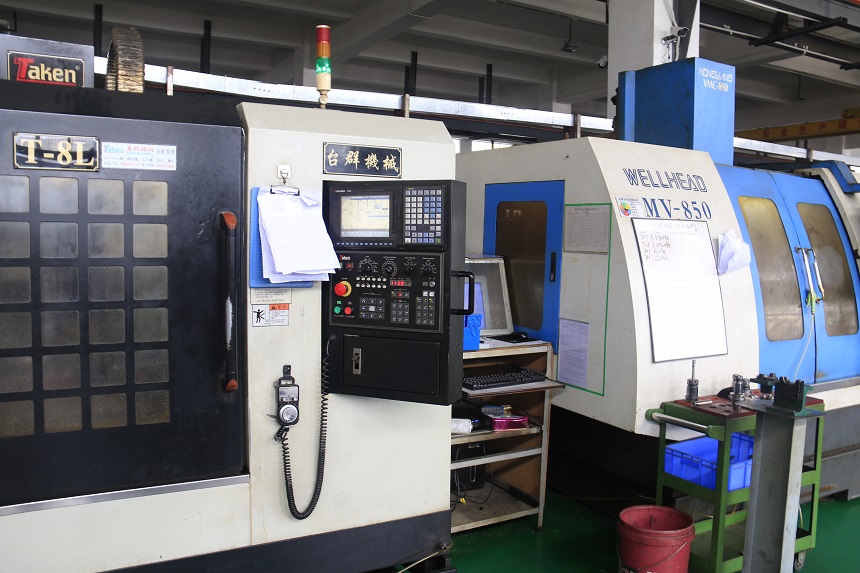
– Machining steel blocks using CNC, EDM, wire cutting, and grinding
– Assembling mold components with micron-level accuracy
– Conducting mold trials to validate performance
– Ensuring the mold meets dimensional, cosmetic, and durability requirements
A skilled injection mold maker ensures that the mold runs smoothly, produces consistent parts, and minimizes maintenance during mass production.
Why Mold Quality Determines Product Quality?
The mold is the foundation of the injection molding process. A poorly designed or poorly machined mold will cause defects such as warpage, flash, short shots, sink marks, and dimensional instability. A high-quality mold, on the other hand, ensures:
– Stable cycle time
– Consistent part dimensions
– Smooth surface finish
– Long mold life
– Reduced scrap rate
– Lower maintenance cost
This is why choosing the right injection mold maker is one of the most important decisions in any plastic product development project.
Comparison Table: Mold Quality vs Production Performance
| Mold Quality Level | Expected Mold Life | Defect Rate | Cycle Time Stability | Maintenance Frequency |
| High Quality | 800,000–1,000,000 shots | Very Low | Excellent | Low |
| Medium Quality | 300,000–600,000 shots | Moderate | Good | Medium |
| Low Quality | <200,000 shots | High | Poor | High |
This table shows how mold quality directly impacts production efficiency, cost, and long-term performance.
The Complete Mold-Making Process Explained
A professional injection mold maker follows a structured engineering workflow. Understanding this process helps buyers evaluate technical capability and project management quality.
Part Analysis and DFM Review
Before mold design begins, the engineering team reviews the part data to identify potential issues.
Typical checks include:
– Wall thickness uniformity
– Draft angle
– Undercuts
– Gate location feasibility
– Cooling efficiency
– Ejection strategy
– Material flow behavior
A good injection mold maker provides clear recommendations to improve manufacturability.
Mold Design
The mold design stage defines the structure and performance of the mold.
Key design elements include:
– Mold base selection
– Cavity and core layout
– Runner and gate design
– Cooling channel layout
– Ejection system
– Venting
– Steel selection
A well-designed mold reduces cycle time and improves part quality.
CNC Machining
High-precision CNC machining shapes the steel blocks into cavity and core geometry.
Important factors:
– 3-axis and 5-axis CNC capability
– Surface finish accuracy
– Dimensional tolerance control
– Toolpath optimization
EDM and Wire Cutting
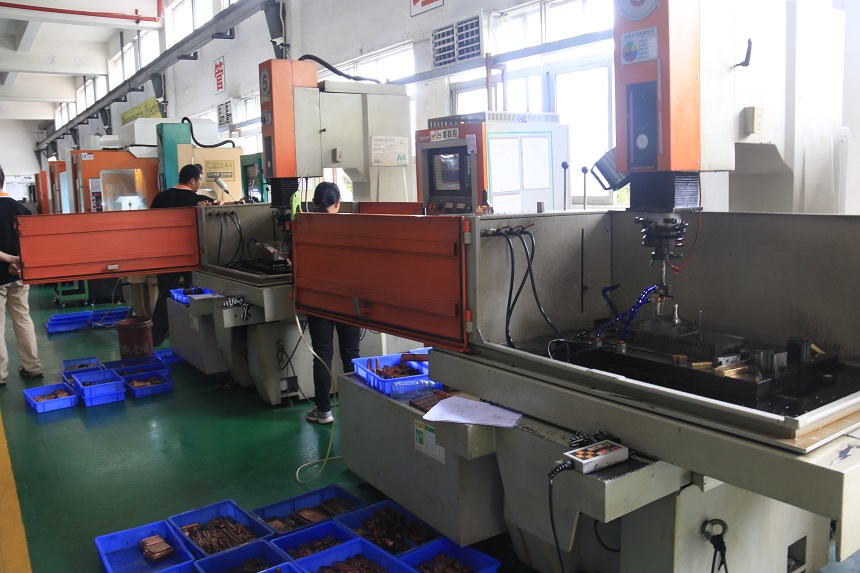
EDM is used for sharp corners, deep ribs, and complex details.
Wire cutting is used for:
– Precision inserts
– Mold components
– Tight-tolerance features
Grinding and Polishing
These processes ensure smooth surfaces and accurate fit between mold components.
Mold Assembly
All components are assembled into a complete mold system.
Key considerations:
– Alignment accuracy
– Cooling channel sealing
– Ejection system smoothness
– Mold base fit
Mold Trial and Validation
The mold is tested on an injection machine.
Validation includes:
– Dimensional measurement
– Cosmetic inspection
– Cycle time optimization
– Mold temperature control
– Gate and runner performance
A reliable injection mold maker provides full trial reports and improvement suggestions.
How to Evaluate a Reliable Injection Mold Maker?
Choosing the right partner requires more than comparing prices. The following criteria help identify a trustworthy injection mold maker.
Engineering Capability
A strong engineering team is essential for complex parts.
Look for:
– Ability to analyze 2D and 3D data
– DFM and Moldflow capability
– Experience with complex structures
– Clear communication and documentation
Manufacturing Equipment
A professional mold maker should have:
– CNC machining centers
– EDM and mirror EDM
– Wire cutting machines
– Grinding and polishing equipment
– Mold testing machines
Quality Control System
Quality must be built into every step.
Key checkpoints:
– Steel hardness verification
– Dimensional inspection
– Mold assembly inspection
– Trial sample measurement
Experience and Industry Knowledge
Years of experience translate into fewer mistakes and faster problem-solving.
Project Management
A reliable mold maker provides:
– Clear timelines
– Weekly progress reports
– Transparent communication
– Fast response to engineering changes
After-Sales Support
Good support ensures long mold life and stable mass production.
Case Study: Improving Production Efficiency with a High-Quality Mold
A global electronics company required a thin-wall housing with tight tolerances and complex internal structures. The project was challenging due to cosmetic requirements and dimensional stability.
The injection mold maker delivered the following results:
– Moldflow optimization reduced warpage by 30 percent
– Mirror EDM improved surface finish to meet cosmetic standards
– Multi-cavity design increased production efficiency
– Cycle time reduced from 18 seconds to 12 seconds
– Dimensional accuracy improved to ±0.03 mm
This case demonstrates how engineering capability directly impacts production performance.
Client Testimonial
We needed a complex multi-cavity injection mold for a high-volume consumer electronics project. The engineering team provided clear DFM feedback, fast communication, and excellent mold quality. The final mold exceeded our expectations in both precision and cycle time performance.
Frequently Asked Questions
What does an injection mold maker actually do?
An injection mold maker is responsible for transforming a digital 3D design into a high‑precision steel mold used for plastic injection molding. Their work includes DFM analysis, mold design, CNC machining, EDM, polishing, assembly, and mold trials. A professional mold maker ensures the mold runs efficiently, produces consistent parts, and meets all dimensional and cosmetic requirements.
How does mold quality affect final plastic part performance?
Mold quality directly determines part quality. A high‑precision mold reduces defects such as warpage, flash, sink marks, and short shots. It also improves cycle‑time stability, reduces scrap rate, and extends mold life. Choosing a reliable injection mold maker ensures long‑term production efficiency and lower maintenance costs.
What should I evaluate when choosing an injection mold maker?
Key evaluation criteria include engineering capability (DFM, Moldflow, complex geometry experience), machining equipment (CNC, EDM, wire cutting), quality control processes, project management transparency, and after‑sales support. A strong injection mold maker should provide clear communication, accurate timelines, and detailed trial reports.
What is the complete mold‑making process?
A professional injection mold maker follows a structured workflow: DFM review → Mold design → CNC machining → EDM/wire cutting → Grinding & polishing → Mold assembly → Mold trial & validation. Each step influences mold precision, cycle time, and long‑term durability.
How can I tell if an injection mold maker is suitable for complex parts?
Look for experience with thin‑wall parts, tight tolerances, multi‑cavity tools, and complex internal structures. The mold maker should provide Moldflow analysis, detailed DFM feedback, and proven case studies demonstrating success with challenging geometries. A capable injection mold maker will proactively optimize manufacturability and reduce mass production risks.
The Best Injection Mold Maker: PTMS
PTMS has been a professional injection mold maker since 2002, providing high-precision molds for global customers. With more than 20+ years of experience, PTMS combines advanced CNC, EDM, wire cutting, and grinding equipment with skilled engineers and strict quality control. The company specializes in prototype molds, multi-cavity molds, family molds, hot runner molds, and unscrewing molds, meeting international standards such as HASCO, DME, JIS, and LKM.
PTMS is a trusted partner for industries including automotive, electronics, medical devices, consumer goods, and industrial applications. For companies seeking a reliable injection mold tooling supplier, PTMS offers precision, efficiency, and long-term value.
Authoritative Sources
MIT – Polymer Processing and Injection Molding Fundamentals
https://ocw.mit.edu/courses/3-063-polymer-processing-spring-2007/pages/injection-molding/
U.S. Department of Energy – Energy Efficiency in Advanced Manufacturing: Plastics and Injection Molding
https://www.energy.gov/eere/amo/articles/energy-efficiency-plastics-manufacturing
NIST – Dimensional Metrology for Precision Mold Manufacturing
https://www.nist.gov/publications/dimensional-metrology-precision-manufacturing
ASM International – Tool Steels for Injection Molds: Properties and Heat Treatment
https://www.asminternational.org/technical-articles/tool-steels-injection-molds