
Plastic Injection Mold Tooling Complete Process & Tight‑Tolerance Precision with PTMS in China
What is plastic injection mold tooling?
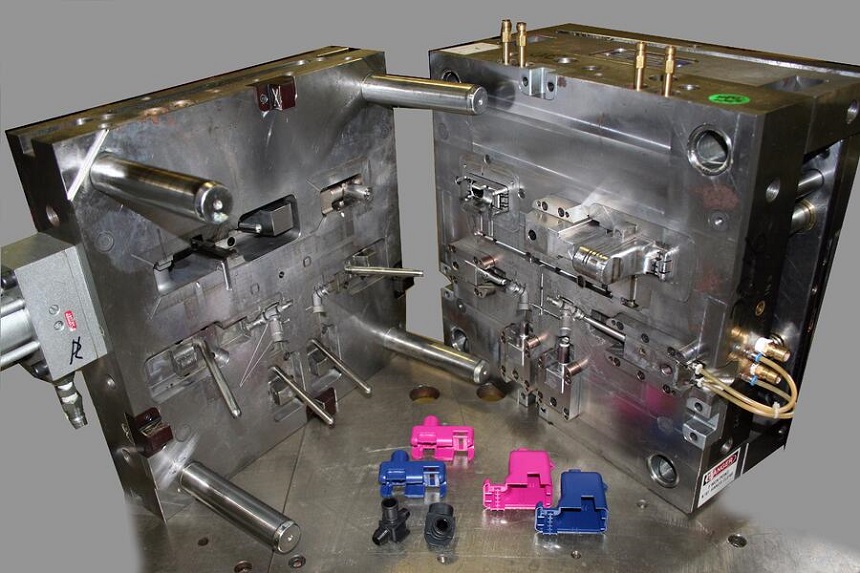
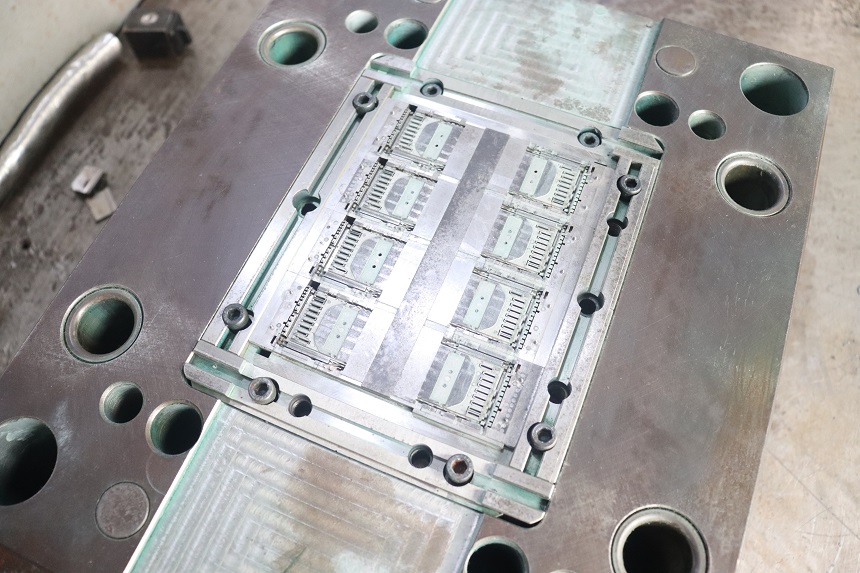
Plastic injection mold tooling refers to the complete steel assembly—cavities, cores, cooling channels, runners, gates, and ejection systems—that transforms molten plastic into millions of repeatable parts. It acts as a “factory in metal” that defines part geometry, surface finish, and dimensional stability across the entire production life of a product.
Core roles of plastic injection mold tooling:
– Ensures consistent part dimensions, wall thickness, and feature geometry from the first shot to the final cycle.
– Enables stable, high-speed production cycles, minimizing scrap, warpage, sink marks, and flow-related defects.
– Directly influences product quality, assembly compatibility, and time-to-market in industries such as automotive, electronics, and medical devices.
Step-by-step: What’s the manufacturing process of plastic injection mold tooling?
A modern plastic injection mold tooling project follows a six-step cycle that maps cleanly onto the broader “design → manufacturing → testing → production” workflow. Each step is critical; skipping or rushing any phase almost always leads to higher correction costs, longer trial-molding runs, or unstable part quality.
6-Step Plastic Injection Mold Tooling Process Overview
The following table summarizes the six main stages of plastic injection mold tooling, along with typical timing, equipment, and key outputs.
| Step | Process | Duration | Key Equipment | Critical Output |
| 1 | Design | 5–10 days | CAD/CAE/NX software | DFM-approved mold design |
| 2 | CNC roughing | 3–7 days | 5-axis CNC machine | Rough-machined cavity and core blocks |
| 3 | EDM finishing | 2–6 days | Sodick EDM / wire-cut | High-precision fine details and sharp corners |
| 4 | Polishing | 1–4 days | Hand polishing tools, abrasive stones | Target surface finish and release performance |
| 5 | Trial molding | 1–3 days | Injection machine, inspection tools | Validated first samples and process settings |
| 6 | Correction | 2–5 days | CNC/EDM rework, CMM inspection | Production-ready mold with final accuracy |
Design: Turning CAD into a manufacturable injection mold
Before any metal is cut, engineers translate the 3D part model into a fully defined mold assembly. This includes cavity layout, parting lines, gate types, runner systems, cooling channels, sliders, lifters, and ejection mechanics. A thorough design-for-manufacturability (DFM) review helps identify potential issues such as thin ribs, deep undercuts, or asymmetrical cooling that would otherwise cause defects later.
Key design considerations:
– Matching part geometry, material shrinkage, and mold steel behavior to ensure early-cycle parts are close to spec.
– Optimizing cooling channel placement to minimize cycle time and part warpage.
– Defining gate and runner systems that balance fill pattern, pressure drop, and shear stress on the polymer.
CNC rough machining: Shaping the steel blocks
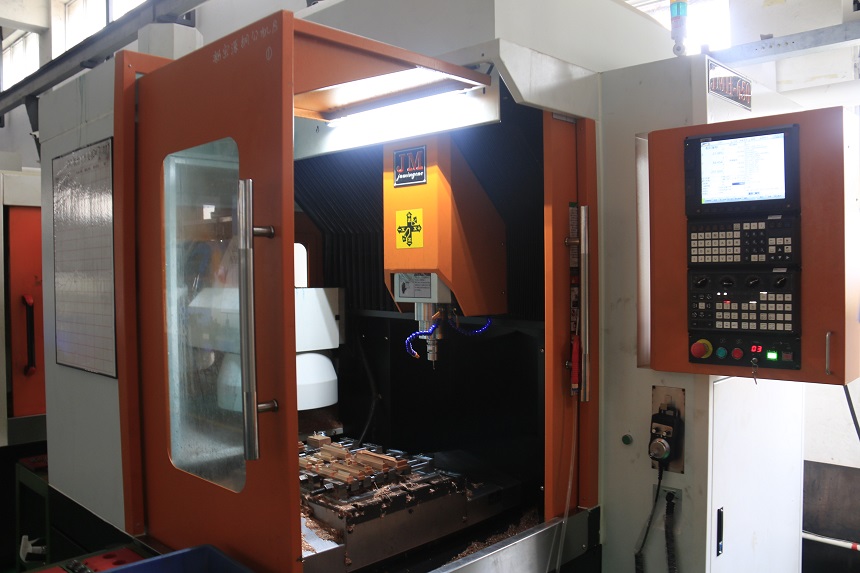
Once the mold design is approved, pre-hardened or tool-steel blocks are mounted on 5-axis CNC machining centers. CNC roughing removes large volumes of material to create the mold base, cavity pockets, and core roughs using high-speed cutting strategies. This step establishes the overall envelope and mechanical structure of the mold, setting the foundation for subsequent precision operations.
Why CNC roughing matters:
– Proper toolpaths and cutting parameters reduce vibration and tool wear, preserving surface integrity for later finishing.
– Precise base geometry and alignment holes ensure that all inserts, plates, and components fit together without rework.
– High-speed CNC allows complex contours and internal features to be machined closer to final shape, saving EDM time.
EDM (electrical discharge machining): Where precision sharpens
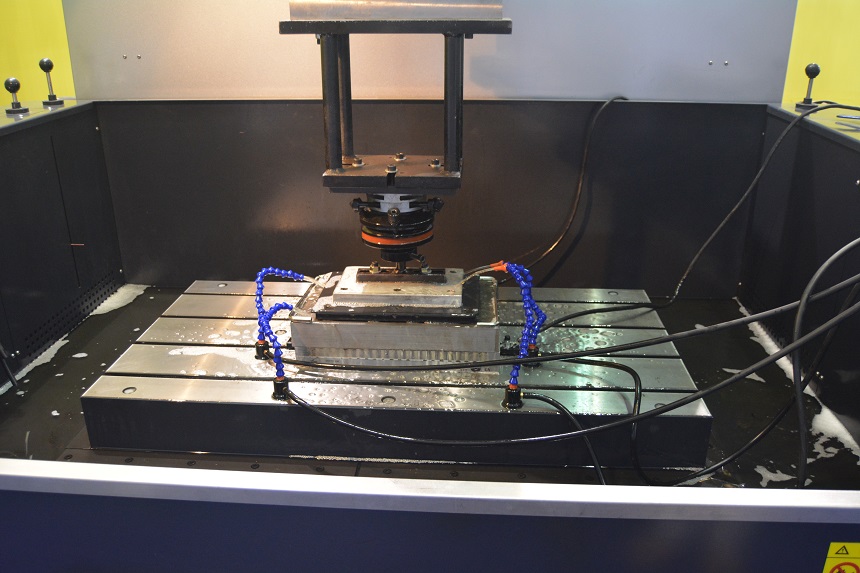
After CNC roughing, EDM processes are used to create highly accurate cavities, fine details, and tight internal features that cannot be reached by conventional milling. Graphite or copper electrodes erode metal through controlled sparks, producing intricate textures, sharp corners, and undercut geometries that match the part’s most demanding features.
Key EDM advantages:
– Capable of achieving sub-0.01 mm tolerances and mirror-like finishes on complex cavities.
– Enables fine ribs, thin walls, and small internal features common in electronics and medical-grade parts.
– Complements CNC by removing localized material without vibration or mechanical stress on the mold steel.
Polishing and surface finishing: From surface roughness to appearance
The polished surface of the mold directly determines the part’s gloss, texture, and release behavior. Polishing ranges from mirror-finish for optical products to structured textures (e.g., matte or decorative grain). This step also includes venting and fine-tuning ejector pin locations to prevent part sticking or scratching.
What polishing controls:
– Part surface quality: gloss level, texture uniformity, and absence of flow lines or tool marks.
– Mold release characteristics: smoother surfaces reduce friction and ejection force, improving cycle time and part longevity.
– Defect prevention: proper venting removes trapped air and gases, reducing burns, short shots, and gas traps.
Trial molding: Testing the tool in real conditions
Once the injection mold is assembled, it is mounted on an injection-molding press and run through a series of trial shots. Process parameters such as melt temperature, injection speed, packing pressure, and cooling time are tuned while engineers inspect part dimensions, weight, and appearance. Any warpage, sink marks, or flow imbalances are recorded and used to adjust the mold or process.
Why trial molding is non-negotiable:
– Reveals how the part behaves under real production conditions, not just from simulation.
– Confirms that the cooling layout, gate design, and venting work together to produce stable, repeatable parts.
– Provides a documented baseline for production runs: validated parameters for temperature, pressure, and cycle time.
Correction and optimization: Closing the feedback loop
Based on trial-molding results, the injection mold may undergo minor or major corrections. This can include adjusting cavity steel, relocating gates or vents, modifying cooling channels, or fine-tuning ejector locations. When executed correctly, these corrections turn a “first-trial mold” into a fully validated, production-ready tooling system.
Benefits of thorough correction:
– Reduces long-term maintenance, downtime, and scrap during mass production.
– Ensures that the mold can achieve the intended 100,000–1,000,000+ cycle life without premature wear.
– Creates a clear, repeatable process that can be scaled across multiple machines or production lines.
This six-step sequence—design, CNC roughing, EDM, polishing, trial molding, and correction—closely resembles the broader “design → manufacturing → testing → production” cycle that OEMs expect from their plastic injection mold tooling partners. The more disciplined this workflow is, the smoother the transition from prototype to high-volume manufacturing becomes.
Critical technical parameters that define top-quality injection tooling
Top-quality plastic injection mold tooling is not just about making cavities; it is about controlling a set of precise physical and material parameters that guarantee long-term performance. When sourcing tooling, engineers frequently ask how the mold will perform over time, not just in the first dozen shots. Three of the most consistently discussed specifications are material grade, dimensional tolerance, and mold life.
Materials: P20, NAK80, H13
P20 (pre-hardened steel)
– Widely used for medium-volume production molds (roughly 100,000–500,000 cycles).
– Offers good machinability, moderate hardness, and relatively low cost, making it suitable for prototypes and consumer products.
NAK80 (pre-hardened mirror steel)
– Chosen when high-gloss, low-roughness surfaces are required (consumer electronics, medical-grade enclosures).
– Provides excellent polishability and dimensional stability with minimal post-processing distortion.
H13 (hot-work tool steel)
– Selected for high-volume, high-temperature applications (heavy-duty automotive, industrial parts).
– Excellent resistance to thermal fatigue and wear, supporting long-life molds exceeding 1,000,000 cycles with proper heat treatment.
Choosing the right material depends on planned annual volume, part complexity, and required surface finish. A mismatch—such as using a low-hardness steel for a million-shot automotive interior—will inevitably lead to accelerated wear, dimensional drift, and higher per-part cost.
Mold Steel Material Comparison for Plastic Injection Tooling
| Steel Type | Hardness (HRC) | Typical Cycles | Best Applications | Cost Level |
| P20 | 28-32 | 100K-500K | Prototypes, low-med volume | Low |
| NAK80 | 38-42 | 500K-800K | Mirror finish, electronics | Medium |
| H13 | 46-50 | 1M+ | High-volume automotive | High |
Dimensional tolerance: ±0.005 mm and beyond
Modern precision injection mold tooling can reliably hold tolerances as tight as ±0.005 mm on critical dimensions, especially when supported by advanced 5-axis CNC machining, EDM, and metrology. For some medical- or optical-grade applications, tolerances can be tightened further, approaching ±0.001–0.003 mm on selected features.
Tight tolerance depends on:
– Precise mold design and simulation of shrinkage and warpage.
– Stable, high-precision machining and minimal thermal distortion during heat treatment.
– Rigorous inspection using coordinate-measuring machines (CMM) and structured-light scanners.
Customers often ask whether “±0.005 mm is necessary” or “can we loosen it to ±0.01 mm.” The answer always depends on whether the feature is a sealing surface, a mating interface, or an optical component; subsystem-level engineering review is essential to avoid over- or under-specifying.
Mold life: 100,000 to 1,000,000+ cycles
High-volume applications typically require mold life in the range of 100,000–1,000,000+ shots. Mold life is influenced by:
– Steel grade and hardness (H13 vs P20 vs NAK80).
– Proper heat treatment and stress-relieving procedures.
– Cooling efficiency and lubrication strategy for ejector pins and sliders.
A well-designed mold can outlive the product’s market life, but only if the initial tooling partners understand the expected volume and life cycle from the very first design review.
How PTMS combines advanced equipment and hands-on expertise?
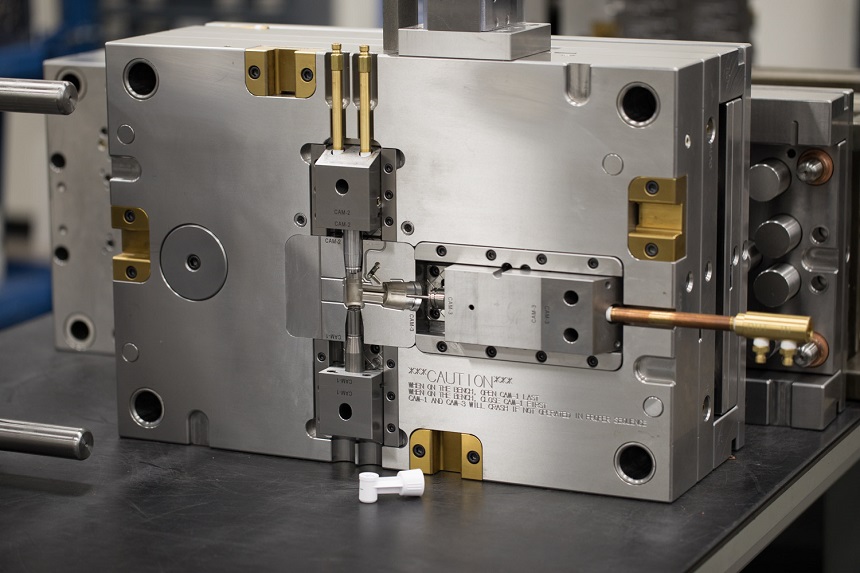
When customers ask “how do you achieve such tight tolerances and high-reliability tooling,” the answer lies in a combination of advanced hardware, rigorous processes, and deep human experience. PTMS leverages a suite of high-end machines and metrology systems that allow for consistent, repeatable injection mold tooling production.
Core equipment and capabilities:
5-axis CNC machining centers
– Enable complex, multi-surface cuts in a single setup, minimizing cumulative error.
– Support high-speed machining of hardened and pre-hardened steels with minimal distortion.
Sodick EDM/wire-cut machines
– Deliver fine-detail cavities, sharp inside corners, and intricate internal features.
– Provide sub-micron repeatability essential for high-precision medical and optical molds.
Zeiss 3D coordinate measuring machine (CMM)
– Used for full-envelope dimensional inspection of cavities, cores, and inserts.
– Validates critical tolerances and confirms that the mold will match the CAD model within the agreed range.
These systems are only effective when paired with experienced toolmakers, process engineers, and metrology specialists who know how to interpret data, adjust machining strategies, and translate process knowledge into repeatable quality.
Case study: Medical-grade injection mold with ±0.01 mm tolerance
One of PTMS’s tracked projects involved a compact medical device enclosure with complex undercuts, tight sealing surfaces, and surface-finish requirements aligned with ISO 13485 and FDA-related standards. The customer’s main concern was dimensional stability over 300,000–500,000 cycles, especially around the seal and mating features.
Key project attributes:
– Mold material: NAK80 for high-gloss, low-roughness cavities.
– Target tolerance on seal and mating surfaces: ±0.01 mm.
– Process: 5-axis CNC roughing, selective EDM on critical ribs and channels, then multi-stage polishing and mirror-finish operations.
The mold was validated through:
– Mold flow analysis and cooling simulation to predict warpage and shrinkage.
– Multiple trial-molding runs with strict dimensional checks on sealing surfaces and wall thickness.
– Final inspection using Zeiss CMM to confirm that all critical dimensions stayed within ±0.01 mm across several shot sequences.
After validation, the customer reported stable production with minimal scrap and no dimensional drift through the first 200,000 shots. In their own feedback, they highlighted PTMS’s ability to translate complex DFM requirements into a robust, production-ready tooling system with predictable performance.
Typical applications of plastic injection mold tooling across industries
High-precision plastic injection mold tooling is not a one-size-fit-all solution. Its value is proven in how well it adapts to different sector-specific demands. PTMS’s experience spans multiple industries, each with distinct expectations for precision, material, and lifecycle.
Automotive components
– Interior trims, connectors, sensors, fluid-handling parts, and structural brackets.
– Require high-temperature resistance, long-life molds, and tight dimensional control for fit and safety.
Electronics and consumer devices
– Smartphone housings, tablet frames, keyboard components, connectors, and camera modules.
– Need high-gloss finishes, tight flatness, and minimal cosmetic defects.
Household appliances and daily-use products
– Kitchenware, storage containers, small appliance housings, and personal-care devices.
– Emphasize cost-effective tooling, good surface finish, and fast time-to-market.
Across these sectors, the common thread is that injection mold tooling must support stable, repeatable production while minimizing defects and maintenance.
Frequently asked questions about plastic injection mold tooling
Engineers and procurement teams ask remarkably consistent questions when sourcing tooling from China. The answers below reflect typical expectations and best practices in the field.
How do you prevent shrinkage and warpage?
Shrinkage and warpage are addressed through: accurate shrinkage data per resin grade, optimized gate and runner layout, and balanced cooling channels. Simulation tools (e.g., mold-flow analysis) help predict warpage before machining, and final adjustments are made during trial molding.
What can be done about sink marks and gas traps?
Sink marks are reduced by uniform wall thickness, properly located ribs, and controlled packing pressure. Gas traps are minimized by strategic venting and optimized filling patterns that push air toward vents instead of trapping it inside the cavity.
How do you deal with melt lines and flow hesitation?
Melt lines (also called weld lines) are managed by optimizing gate location, injection speed, and mold temperature. In some cases, local geometry is adjusted to allow melt fronts to meet at low-stress areas or to use secondary gates.
How do you ensure the mold can reach 100,000+ cycles?
Long-life performance comes from choosing the right steel grade (P20 vs NAK80 vs H13), proper heat treatment, and robust cooling that prevents thermal cycling damage. Ejector pins, sliders, and lifters are also designed and maintained to minimize wear over time.
What support do you provide during trial molding and production ramp-up?
PTMS supports customers with on-site or remote trial-molding support, documentation of validated process parameters, and periodic mold inspections. This helps customers transition smoothly from sample approval to mass production while keeping defect rates low.
PTMS’s advantages in China plastic injection mold tooling market
Among the many plastic injection mold tooling providers in China, PTMS distinguishes itself through technical depth, process maturity, and equipment sophistication. The company’s core strengths include:
– End-to-end process control from CAD-based design through CNC machining, EDM, polishing, trial molding, and documentation.
– High-precision capabilities routinely delivering ±0.005–0.01 mm tolerances on critical dimensions, backed by advanced 5-axis CNC, Sodick EDM systems, and Zeiss 3D metrology.
– Multi-industry experience serving automotive, electronics, medical, and consumer-goods sectors with injection mold tooling that meets strict dimensional, cosmetic, and regulatory requirements.
– Proven track record of mold life exceeding 100,000–1,000,000+ cycles when appropriate materials and designs are selected.
For customers seeking a lower-risk, higher-efficiency partner for plastic injection tooling, PTMS offers a rare combination of advanced hardware, deep technical know-how, and long-term reliability. In industries where tooling cost, quality, and time to market are tightly linked, this combination is not easy to replicate.
PTMS: the Leading Plastic Injection Mold Tooling Company in China
When evaluating plastic injection mold tooling providers in China, buyers consistently look for: precise and repeatable tooling, robust process control, strong technical support, and proven reliability across multiple industries. PTMS meets all of these criteria through:
– Specialized focus on plastic injection mold tooling, rather than general metal fabrication.
– Over 20+ years of experience in high-volume, high-precision applications, including automotive, electronics, and medical-grade enclosures.
– Advanced manufacturing and inspection infrastructure, including 5-axis CNC, Sodick EDM systems, and Zeiss 3D coordinate-measuring machines.
– A proven ability to deliver complex, multi-cavity molds with tight tolerances (down to ±0.01 mm) and long-life performance (100,000–1,000,000+ cycles).
For global OEMs and contract manufacturers, PTMS provides a stable, low-risk partner for plastic injection mold tooling projects in China. By combining advanced equipment, deep process knowledge, and a structured design-to-production workflow, PTMS helps customers reduce time to market, minimize defects, and scale production with confidence.
Actionable next step: How to start your projects with PTMS?
If you are searching for a reliable plastic injection mold tooling manufacturer in China, the simplest way to begin is to upload your CAD files for review. PTMS offers:
– A free design-for-manufacturability (DFM) assessment within 24 hours of receiving your data.
– A professional quotation that includes estimated tooling cost, lead time, and recommended mold material and cavity count.
By choosing PTMS, you are not just selecting a supplier—you are partnering with a team that understands the full lifecycle of plastic injection mold tooling, from first sketch to final production run.
Recommended authoritative reference sources:
MIT – Injection Molding
Injection Molding: Basic Operation, Tooling, and New Developments
Texas A&M University – Injection Mold Design
Injection Mold Design: Curriculum and Tooling Considerations
National Library of Medicine (PMC)
Springer Nature
MDPI Polymers Journal