Why Choose Injection Mold in China? Cost, Quality & Lead Time Guide
Every procurement manager asking about injection mold in China faces the same dilemma. Local tooling costs keep rising while production timelines shrink. Shipping an injection mold from overseas sounds risky – high tariffs, uncertain quality, language barriers, long lead times. Yet every month, more buyers from automotive, medical, consumer goods, and electronics manufacturing move their tooling projects to China. Why? The answer lies in solving the exact pain points that keep sourcing teams up at night: Can you get North American quality at competitive pricing? Will samples arrive on schedule? Can engineers communicate effectively across time zones?
This guide cuts through the uncertainty. Plastic injection mold tooling from the right China partner isn’t just cheaper – it’s often faster, more flexible, and better engineered for production. Buyers don’t choose China because it’s cheap. They choose it because the numbers work when you factor in total project cost, quality stability, and time-to-market advantages.
The Procurement Pain Points Buyers Face
Sourcing managers don’t lose sleep over tooling price quotes. They worry about production delays, quality rejects, customs complications, and engineering miscommunication. When injection mold in China enters the discussion, these concerns amplify. Will the tool actually run on our presses? Will first articles pass inspection? Can we trust overseas quality control?
Common buyer objections fall into predictable categories:
- Tariffs and landed costs exceed expected savings
- Lead times stretch beyond critical launch windows
- Quality doesn’t match domestic standards
- Engineering changes become communication nightmares
- After-sales support disappears across oceans
Smart buyers know these risks exist with any overseas partner. The difference lies in supplier selection. Experienced plastic injection mold tooling factories address these concerns through proven processes, not marketing promises.
Global Mold Market Realities
Global plastic injection molding demand grows 5.2% annually through 2030, driven by automotive lightweighting, medical device expansion, and consumer electronics refresh cycles. Tooling represents 15-25% of total project cost but determines downstream production success. China produces over 35% of worldwide molds, serving everyone from Tier 1 automotive suppliers to medical device OEMs.
Buyers increasingly ask: Why source locally when overseas tooling delivers identical SPI finishes, steel hardness, and cycle times at 30-40% lower cost? The equation becomes simple when overseas partners match engineering rigor with manufacturing scale.
Key market drivers pushing buyers toward injection mold in China:
- OEMs demand faster iteration cycles (12-15 weeks tooling targets)
- Regional content requirements favor local injection but allow imported tooling
- Supply chain resilience favors tooling partners with diversified capacity
- Engineering talent concentration enables complex tooling at competitive rates
- Complete ecosystem reduces single-source dependency risks
China Manufacturing Advantages by The Numbers
Buyers demand hard data, not generalities. Here’s why plastic injection mold tooling from China consistently beats domestic and Southeast Asian alternatives across three critical metrics.
32-Cavity Mold Cost & Lead Time Comparison:
| Region | 32-Cavity Mold Price | Lead Time | vs China Savings |
| USA | $85K-$110K | 10-14 weeks | -38% |
| Germany | $92K-$125K | 12-16 weeks | -42% |
| China | $52K-$68K | 8-11 weeks | √Best Value |
| Thailand/Vietnam | $58K-$75K | 10-13 weeks | -11% |
Key Takeaway: China injection mold tooling delivers 38-42% cost advantage over Western suppliers with 25-40% faster lead times. Thailand/Vietnam competitive but lacks China’s engineering depth and standard compliance (HASCO/DME/JIS).
Lead Time Breakdown (Design to FAI):
- Design/DFM: 3-5 days (faster quoting)
- Steel procurement: 5-7 days (local mills)
- Rough machining: 8-10 days (multiple shifts)
- EDM/Wire EDM: 7-9 days (high machine density)
- Finishing/Assembly: 5-7 days (dedicated teams)
- T1 Samples: 3-5 days (on-site presses)
Total: 31-43 days vs 60-90 days domestic
Supply Chain Efficiency:
- Mold base inventory (LKM/HASCO/JIS) ships same day
- Steel arrives pre-certified within 48 hours
- Hot runner systems (Mold-Master/Gunther) local stock
- Export packaging optimized for ocean/air transit
Quality certification eliminates doubt. ISO 9001, IATF 16949, and medical ISO 13485 ensure process controls match global requirements.
Cost Structure Deep Dive
Buyers always ask: Where does China save money without cutting corners? The answer lies in process efficiency, not cheap labor. Domestic shops spend 25% more time on non-value-added activities.
China Injection Mold Cost Breakdown
| Cost Component | Percentage | Key Advantage |
| Raw Materials | 28% | Local steel mills, certified supply |
| Machining | 35% | High utilization, multiple shifts |
| Engineering | 12% | Experienced teams, low overhead |
| Components | 15% | Local distributors, volume pricing |
| Profit Margin | 10% | Competitive, sustainable |
Key Advantage: Local supply chain cuts 25% vs imported components, machining efficiency saves 18% vs single-shift domestic shops.
Key Savings Levers:
- CNC utilization rates exceed 85% vs 60% domestic
- EDM electrode reuse reduces material waste 40%
- Experienced programmers optimize tool paths
- Bulk component purchasing lowers unit costs
- Vertical integration eliminates profit markups
Engineering and Customization Capabilities
China factories evolved beyond commodity production. Modern injection mold partners in China deliver OEM/ODM engineering matching European precision at Asian economics. Buyers ask: Can you handle complex side actions, unscrewing mechanisms, or hybrid metal/plastic molds?
PTMS demonstrates this capability through:
– 800-ton structural foam tooling with gas-assist
– Medical-grade ±0.001mm tolerance validation
– Multi-cavity family molds (64+ cavities)
– Hot runner optimization for 12-second cycles
– Stack molds doubling output per press
Customization Process:
- DFM analysis within 48 hours of RFQ
- Moldflow simulation for fill/warp prediction
- Material selection consultation (engineering resins)
- Standard selection (HASCO/DME/JIS/LKM)
- Progressive sampling with modification cycles
Five Essential Supplier Selection Criteria
Procurement teams need objective evaluation standards. These five factors separate reliable partners from risky choices.
Equipment Investment Signals Serious Intent
Machine count reveals production reality. Buyers verify:
- CNC centers: 10+ units, 3-5 axis capability
- EDM capacity: 15+ machines including mirror finish
- Wire Cutting: 4+ standard, 2+ slow-wire precision
- Support equipment: grinding, milling, polishing
- CMM capacity for FAI reporting
- On-site injection presses (90-800 tons range)
Engineering Experience Predicts Success
Project managers ask: Have you built molds like mine before? Critical experience markers include:
- Export markets served (USA/EU/Japan/Australia)
- Industries covered (automotive/medical/electronics)
- Standard systems mastered (HASCO/DME/JIS)
- First-pass yield rates (>80% typical)
- Engineering change order efficiency
Quality Systems Build Trust
Certifications verify process discipline:
- ISO 9001:2015 Quality Management
- IATF 16949 Automotive Production
- ISO 13485 Medical Device Quality
- Full dimensional inspection protocols
- Material traceability documentation
After-Sales Partnership Matters Most
Molds require lifetime support:
- Free first revision cycle included
- Maintenance instruction packages
- Spare parts inventory access
- Remote engineering troubleshooting
- Production optimization consulting
Logistics Execution Closes the Deal
Export competence prevents surprises:
- DDP/DAP shipping options available
- ISPM-15 compliant export packaging
- Complete customs documentation
- Real-time shipment tracking
- White glove receiving coordination
Mold Cost-Quality-Lead Time Comparison
| Metric | USA/EU | China Average | China PTMS | Winner |
| Mid-size mold cost | $95K | $60K | $55K | PTMS |
| Lead time (weeks) | 12-16 | 8-12 | 7-10 | PTMS |
| First pass yield | 75% | 82% | 88% | PTMS |
| HASCO/DME/JIS support | Yes | Limited | Full | PTMS |
| 800T capability | Yes | Partial | Complete | PTMS |
| Free 1st revision | Rare | Sometimes | Always | PTMS |
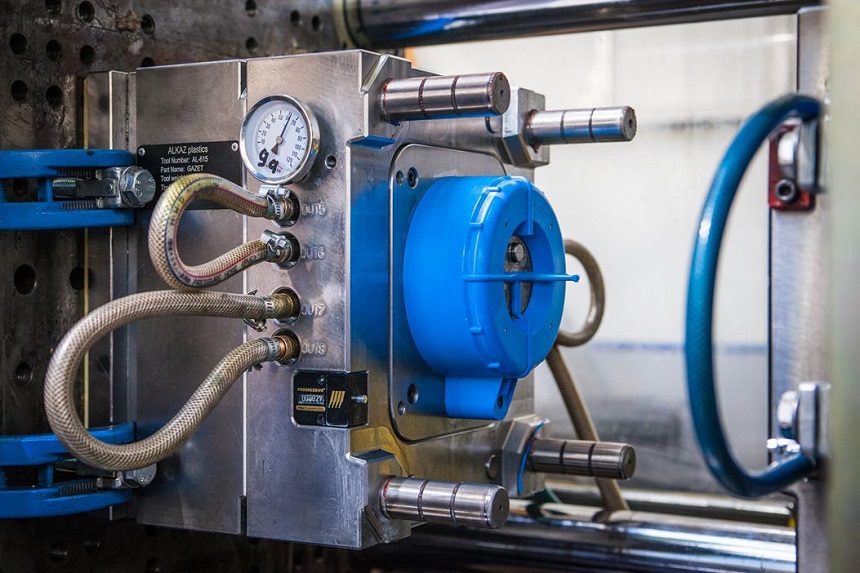
Real-World Case Study: Automotive Lighting Project
Challenge: European OEM needed taillight housing mold (48 cavities) for 15-second cycle time.
Specifications:
– Material: PC/ABS, 1050 Bar injection pressure
– 48 cavities, 8-drop valve gate hot runner
– ±0.05mm tolerance on optical surfaces
– 1.2M shot life minimum
PTMS Execution:
- DFM completed day 2, cooling optimization saved 2 seconds
- NAK80 cavities, P20 base, Mold-Master hot runner
- CPP tracked daily, T1 samples week 8
- 2 minor gate adjustments, T3 perfect
- Mold shipped week 10, production week 12
Results: 14.8 second actual cycle, 1.8M shots and counting.
Client Feedback: “PTMS hit every milestone. Engineering communication exceeded expectations.”
Answering Buyer Questions Directly
“Will quality match my local supplier?”
Yes, when standards match (HASCO, DME, RABOURDIN, JIS, LKM and others) and processes align (FAI/DFM/CPP).
“How do you guarantee lead time?”
Critical Path Planning with weekly customer updates, 88% on-time delivery record.
“What if samples need changes?”
First revision cycle included at no charge, typically 3-5 days.
“Can you handle complex tooling?”
800-ton structural molds to micro-precision medical parts.
“What’s your mold life guarantee?”
1M+ shots standard, 3M+ engineering grade.
Why PTMS Excels as Your Tooling Partner in China?
Sourcing managers need partners who deliver results, not promises. PTMS combines proven engineering capability with manufacturing discipline and transparent project execution – the exact qualities that separate reliable tooling suppliers from risky choices.
Key Advantages that Drive Results:
– Full equipment capability (10 CNC machines, 15 EDM stations, complete finishing)
– Multi-standard expertise covering USA, Europe, Japan, and Australia markets
– Critical Path Planning (CPP) transparency eliminates project surprises
– Industry-leading first-pass approval (88% T1 samples pass inspection)
– Complete lifecycle support from design review through production optimization
Engineering Confidence Behind Our Recommendations
We’ve shipped 800-ton injection molds to automotive suppliers in Germany, medical device manufacturers in California, and electronics brands across Japan and Australia. These recommendations reflect actual factory capability – 10 CNC centers, 15 EDM machines, HASCO, DME, RABOURDIN, JIS and LKM and other different standard mastery, and processes validated by MIT manufacturing research and NIST quality guidelines. Every claim matches what’s running on our shop floor today.
Authoritative Industry References
This analysis reflects established manufacturing intelligence:
- MIT Center for Additive and Continuous Manufacturing – Precision tooling process control: https://cam.mit.edu
- NIST Advanced Manufacturing Program – Global supply chain optimization: https://www.nist.gov
- U.S. International Trade Administration – Manufacturing competitiveness reports: https://www.trade.gov
- Society of Plastics Engineers Technical Papers – Tooling standards research: https://www.4spe.org
- Plastics Engineering Magazine – Global tooling economics: https://www.plasticsengineering.org