
Special Gate Types in Plastic Injection Mold: Advantages, Disadvantages, and Engineering Applications
Beyond conventional gate types, there is a group of gate designs that are more purpose-built. These gates are not intended for general use. They are designed to solve specific molding challenges, such as uniform filling of large flat surfaces, balanced flow in annular parts, reduced shear in thin-wall products, or concealed gate marks on cosmetic surfaces.
In actual projects, these gate types of plastic injection tooling are not the default choice. However, when a part geometry exceeds the capability of a standard side gate, selecting the right gate type often determines whether mold trials pass consistently. This is especially true in projects involving long flow paths, symmetrical structures, or high cosmetic requirements, where gate design itself becomes a critical variable.
1. Spoke Gate
Advantages
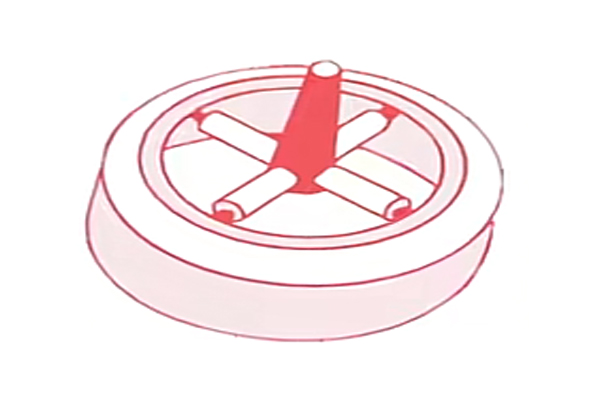
A spoke gate is suitable for center-symmetric parts, especially large-diameter disc or cover-type products. Typical wall thickness ranges from 1.5mm to 4mm, and the material should have at least medium flowability. It is not recommended for eccentric structures or parts with significant wall thickness variation.
Defects
If trial molding shows uneven circumferential shrinkage or noticeable warpage in one direction, the first suspect should be uneven filling, not cooling or packing adjustment. If the defect is concentrated at a specific angular position, check whether the runner branches are balanced, and then verify that venting is not locally restricted.
2. Fan Gate
Advantages
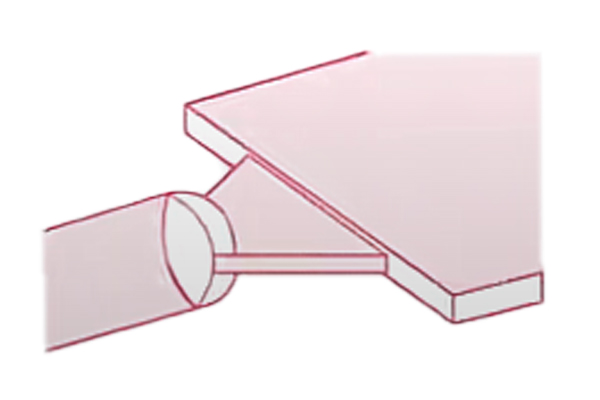
A fan gate is ideal for large, flat, thin-wall parts with long flow paths, such as appliance panels and housings. Typical wall thickness ranges from 1mm to 3mm, and materials with at least medium flowability, such as ABS or PP, are suitable. When a side gate or pinpoint gate produces flow marks or jetting, a fan gate should be considered.
Defects
If flow marks are concentrated near the gate area and appear as streaks along the flow direction, the root cause is usually overly concentrated feeding, rather than temperature or pressure alone. If adjusting injection speed provides limited improvement, widening the feed area should be prioritized before increasing injection pressure further.
3. Ring Gate
Advantages
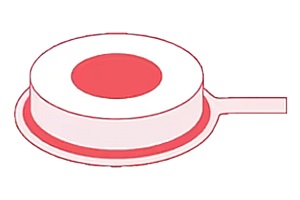
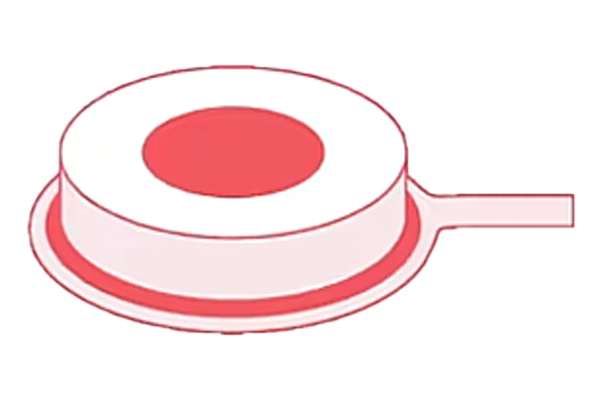
A ring gate of plastic injection mold tooling is suitable for cylindrical or annular parts such as containers and tubular components. Typical wall thickness ranges from 2mm to 5mm, and the design works well for medium to large symmetrical products. High structural symmetry is required; otherwise, imbalance issues may be amplified.
Defects
If localized sink marks or deformation remain after multi-point feeding, first verify that the ring runner cross-section is uniform before adjusting packing pressure. If the problem consistently appears at a specific angular position, verify that venting is evenly distributed to avoid localized flow restriction.
4. Diaphragm Gate
Advantages
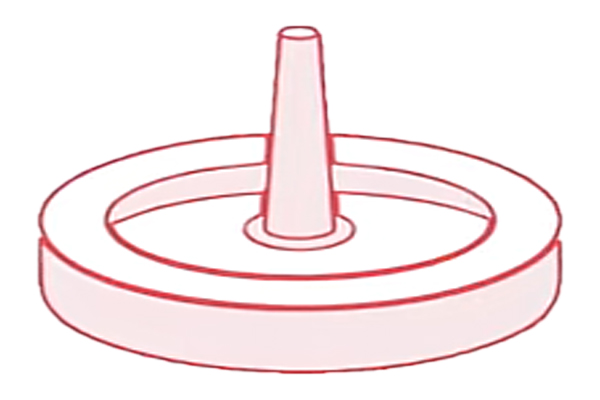
A diaphragm gate is suitable for thin-wall, transparent, or high-cosmetic circular parts such as optical components and clear covers. Typical wall thickness ranges from 0.8mm to 2.5mm, and materials such as PC and PMMA are commonly used. This gate type is preferred for parts with high requirements for internal stress control and optical performance.
Defects
If stress marks or optical distortion appear in transparent parts, the first suspect should be uneven filling or localized high shear, not simply temperature issues. If defects are concentrated in the center region, check whether the diaphragm thickness distribution is uniform.
5. Film Gate
Advantages
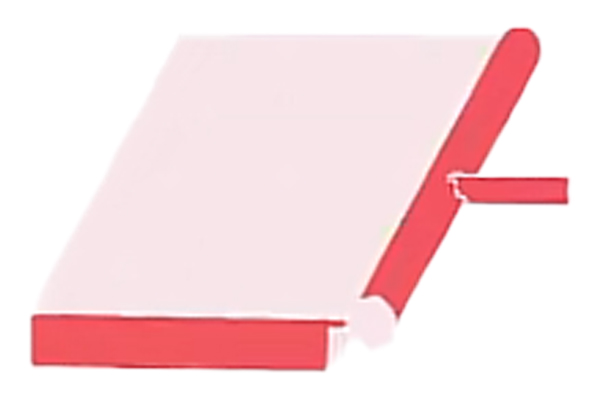
A film gate is suitable for large-area thin-wall parts such as transparent panels and decorative components. Typical wall thickness ranges from 0.8mm to 2.5mm, and the design is well suited for parts with high cosmetic requirements.
Defects
If surface ripple or widespread flow unevenness occurs, the root cause is usually overly concentrated feeding. If the defect spreads across the entire surface rather than being localized, it indicates an unstable flow front, and the feed geometry should be reconsidered.
6. Banana Gate
Advantages
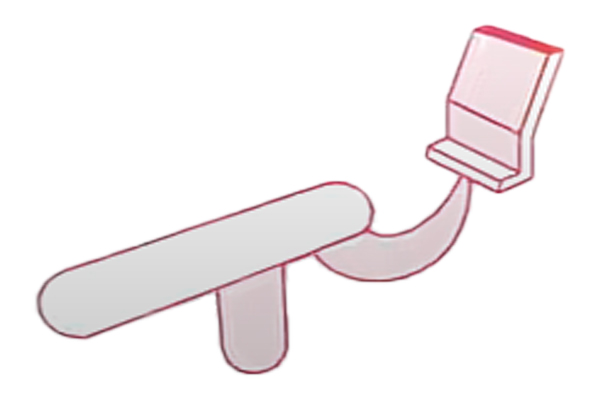
A banana gate, also known as a cashew gate, is suitable for small to medium cosmetic parts such as electronic housings and precision components. Typical wall thickness ranges from 1mm to 3mm, and the material should have reasonable toughness. This gate type is used when a hidden gate location and automatic degating are required. If you need to find top-quality injection mold tooling in China, maybe you can see such gate if possible.
Defects
If the cosmetic surface cannot tolerate visible gate vestige, the priority should be to hide the gate through part geometry, rather than relying solely on post-processing. If the break-off point is inconsistent, check mold precision first before adjusting process parameters.
FAQ: Common Engineering Questions About Special Gates
Q1: When is it necessary to switch to a special gate type?
When defects are consistently tied to the flow path and cannot be resolved through process adjustments, the gate type itself should be reconsidered.
Q2: Are special gates always more stable?
Not necessarily. They often increase complexity and are only more stable when the part geometry specifically suits them.
Q3: How do you distinguish between a gate problem and a process problem?
If the defect position is fixed and aligns with the flow path, it is likely a gate issue. If the defect varies across cycles, it is more likely a process issue.