
How to Solve Gas Bubbles in Plastic Injection Molded Parts?
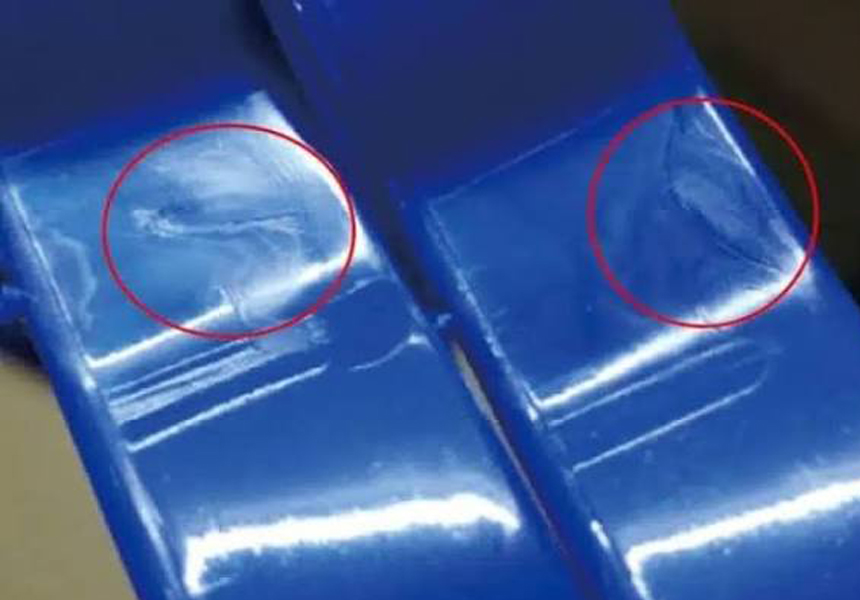
Gas bubbles can appear as round or oval defects in plastic injection molded parts, but they do not form for the same reason. Treating them as one problem can lead to ineffective troubleshooting.
In plastic molded parts produced by injection molding, the first step is to determine whether the defect is a gas bubble. Once the defect type is identified, the inspection path becomes clearer: gas bubbles require attention to venting, material preparation, and processing conditions, also require attention to wall thickness, packing, gate freeze-off, and feeding conditions.
What is Gas Bubbles?
Gas bubbles may appear as round or oval marks on the part surface, or as visible pockets within the injection molded part. In transparent or light-colored materials, they may be especially easy to identify.
They are commonly associated with:
– Trapped air in the cavity
– Moisture remaining in the resin
– Volatiles released during injection molding
– Gas generated by excessive melt temperature or material degradation
– Air incorporated during plasticizing
When gas bubbles occur near flow-end areas, weld-line regions, or areas with limited venting, cavity air removal should be reviewed first.
Like sink marks, gas bubbles can be associated with differential shrinkage in thick-wall sections and insufficient packing. The main difference is that sink marks appear as surface depressions, while vacuum voids form as internal cavities.
The Reason of Gas Bubbles
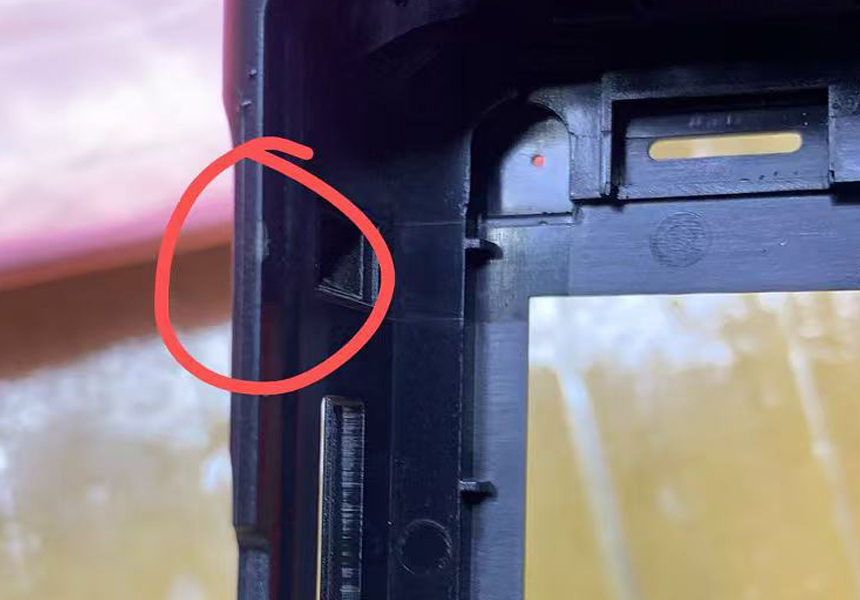
1. Inadequate Venting
During filling, air inside the cavity must escape as melt enters the mold. If venting is restricted, blocked, or poorly positioned, gas may become trapped and form bubbles in the finished part.
Venting should be reviewed at flow-end regions, areas with complex geometry, and locations where bubbles repeatedly appear.
2. Insufficient Material Drying
Moisture in the resin can vaporize at molding temperature and form gas bubbles. This is particularly important for materials that absorb moisture during storage and handling.
Material drying should be controlled before injection molding. The drying condition should match the material requirement, and resin should be protected from moisture after drying.
3. Excessive Injection Speed or Melt Temperature
If injection speed is too high, air may not have enough time to escape from the cavity. If melt temperature is too high, the material may become overly fluid or generate more volatile gas.
Injection speed and melt temperature should be reviewed together. Reducing only one setting may not solve the issue if the underlying venting or material condition remains unchanged.
4. Plasticizing and Material Condition
Gas may also be introduced during plasticizing. Screw speed, back pressure, and material handling can affect how much air becomes incorporated into the melt.
Long residence time, unstable material condition, or excessive volatile release can also contribute to bubble formation.
The Solution for Gas Bubbles
Injection Mold Engineers
– Add or improve venting at appropriate flow-end and gas-trap locations.
– Clean vent grooves to maintain effective air removal.
– Review vent condition where bubbles repeatedly occur.
Process Engineers
– Reduce injection speed when air cannot escape effectively.
– Lower melt temperature within the material’s recommended processing range.
– Review screw speed and back pressure during plasticizing.
– Avoid unnecessarily long material residence time.
Material Handling
– Ensure sufficient material drying before molding.
– Protect dried resin from moisture before it enters the machine.
– Review material condition when volatile release or degradation is suspected.
– Ensure sufficient cooling before ejection.
Frequently Asked Questions
Q1: What is the difference between a gas bubble and a vacuum void?
A gas bubble contains trapped air, moisture vapor, or released volatiles. A vacuum void forms when a thick section shrinks during cooling and does not receive enough material for compensation.
Q2: Can insufficient material dry cause gas bubbles?
Yes. Moisture in the resin can vaporize at molding temperature and create gas bubbles. Material drying should be confirmed before adjusting other process settings.
Q3: Can higher holding pressure eliminate vacuum voids?
Higher holding pressure can improve shrinkage compensation, but it may not fully eliminate vacuum voids if the gate freezes too early, the wall section is too thick, or the feeding path is ineffective.
Q4: Why do vacuum voids occur mainly in thick-wall sections?
Thick sections cool and shrink more slowly than surrounding thin sections. If the outer skin becomes rigid before the interior shrinkage has been compensated, an internal cavity can form.
Q5: Where should venting be checked when gas bubbles appear?
Venting should be reviewed near flow-end regions, complex geometry, and locations where bubbles repeatedly appear. Vent grooves should also be checked for blockage or contamination.
Q6: Can short-shot trials help diagnose gas bubbles?
Yes. A controlled series of short shots can help reveal the flow path and identify whether the defect begins near a specific flow-end or gas-trap location. This method is most useful for suspected gas bubbles caused by trapped air, rather than vacuum voids caused by shrinkage.